

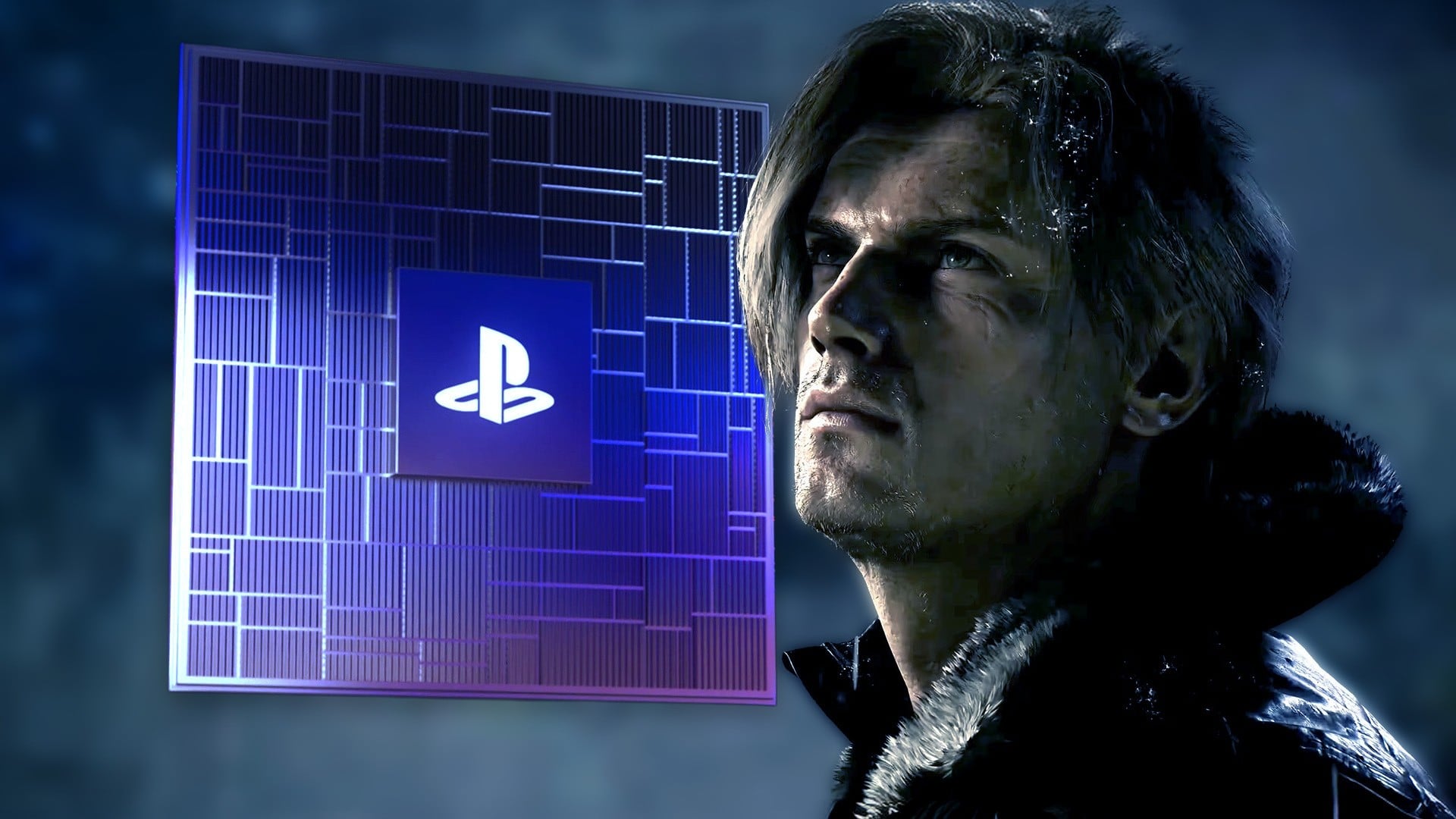
The gaming community is buzzing with anticipation as Sony officially unveils the latest iteration of PlayStation Spectral Super Resolution (PSSR) technology, implemented in Resident Evil Requiem for the PS5 Pro. This next generation solution, rooted in AMD’s renowned FSR4 technology, promises a notable enhancement in visual fidelity thanks to its machine learning foundations. This upscaling approach not only improves graphics in the new Capcom release but also provides an option to refresh older games with enhanced visuals.
However, early assessments of PSSR should be approached with caution. The performance can vary widely across different games, and past implementations have shown mixed results. While some titles showcased impressive graphics, others experienced noise and unwanted artifacts, particularly in foliage and ray-traced content. Games faced severe instability with lighting, resulting in less-than-stellar reflections.
This new PSSR leverages AMD’s FSR4 architecture, raising hopes for addressing previous shortcomings. Evaluations of Resident Evil Requiem’s ray tracing mode show a seamless upscale to 4K from a resolution slightly above 1080p. Subtle details, such as intricate stitching on character outfits and small print on environmental signs, appear clear on a 4K display. Edge definition has seen significant improvements, promising a visually rich gaming experience at 60fps.
While some noise remains in specific ray tracing scenes, this issue is rooted in Capcom’s denoising methods rather than PSSR itself. Similar observations are noted in PC versions using DLSS or FSR4.
Following confirmation from Sony about PSSR’s integration, a comparative analysis with other upscalers like DLSS and FSR4 began. While newer versions can provide clearer resolutions in motion-heavy scenes, some moving elements might still exhibit aliasing more prominently on the new console’s upscaler. Each upscaler has its advantages and drawbacks, with PSSR effectively avoiding ghosting issues found in Resident Evil Requiem.
Interestingly, while FSR4 is tied to PSSR, various strengths emerge depending on scene type and lighting. In some scenarios, DLSS may appear sharpest, followed by PSSR and FSR4, particularly noticeable with text clarity and distant details. Classic benchmarks show that the performance of PC upscalers remains superior.
It’s important to note that analysis of upscalers mirrors the methodology for PC titles. PC gamers often view content from closer distances, making artifacts more apparent, while PSSR caters to a standard living room setup, where viewers sit farther from the screen. The first release of PSSR struggled in this environment, but early impressions of the new version suggest substantial improvements.
Though early examinations show promise, caution should remain. The success of PSSR in Resident Evil Requiem doesn’t negate the need for further testing, especially with titles that rely on sub-1080p inputs. The game’s dark, atmospheric visuals can impede the visibility of improvements, complicating a definitive assessment. However, available content tests indicate that the new PSSR competes well with PC alternatives.
Excitement surrounds the new “Enhance PSSR Image Quality” option, which allows users to unlock better image quality system-wide. With ongoing updates from developers, many games are expected to implement the new PSSR, although some may opt out. Time will reveal whether these updates can achieve results comparable to native enhancements, and experiences with this technology will continue to be shared.
In summary, the revamped PSSR showcased in Resident Evil Requiem signals significant strides in machine learning upscaling on the PS5 Pro. Achieving sharp, stable 4K visuals from a fraction of the original pixel count, it competes effectively with PC solutions, presenting a meaningful upgrade from earlier iterations. The potential for these improvements to extend to previous titles adds an exciting dimension to the console’s future.
Key Takeaways
- The new PSSR enhances visuals based on AMD’s FSR4 technology, providing a promising upgrade for PS5 Pro users.
- Performance may vary across different titles, as earlier versions of PSSR showed mixed results.
- Noise in some scenes stems from Capcom’s denoising methods rather than PSSR itself.
- Comparisons with DLSS and FSR4 reveal unique strengths and weaknesses, especially in motion scenes.
- Viewer perspective matters; PSSR may be more effective in typical console viewing setups.
- Future game updates could enhance the graphical experience, establishing a new standard across the library.
- The “Enhance PSSR Image Quality” option offers exciting prospects for improved gameplay visuals.