

Exploring Amazon’s New AI Wearable: A Dual-Edged Tool for Modern Life
Recently, I explored the latest wearable technology by Bee, integrated into Amazon’s ecosystem. This device, which straps to your wrist, functions as an AI-based assistant with the potential to influence how we organize our daily activities.
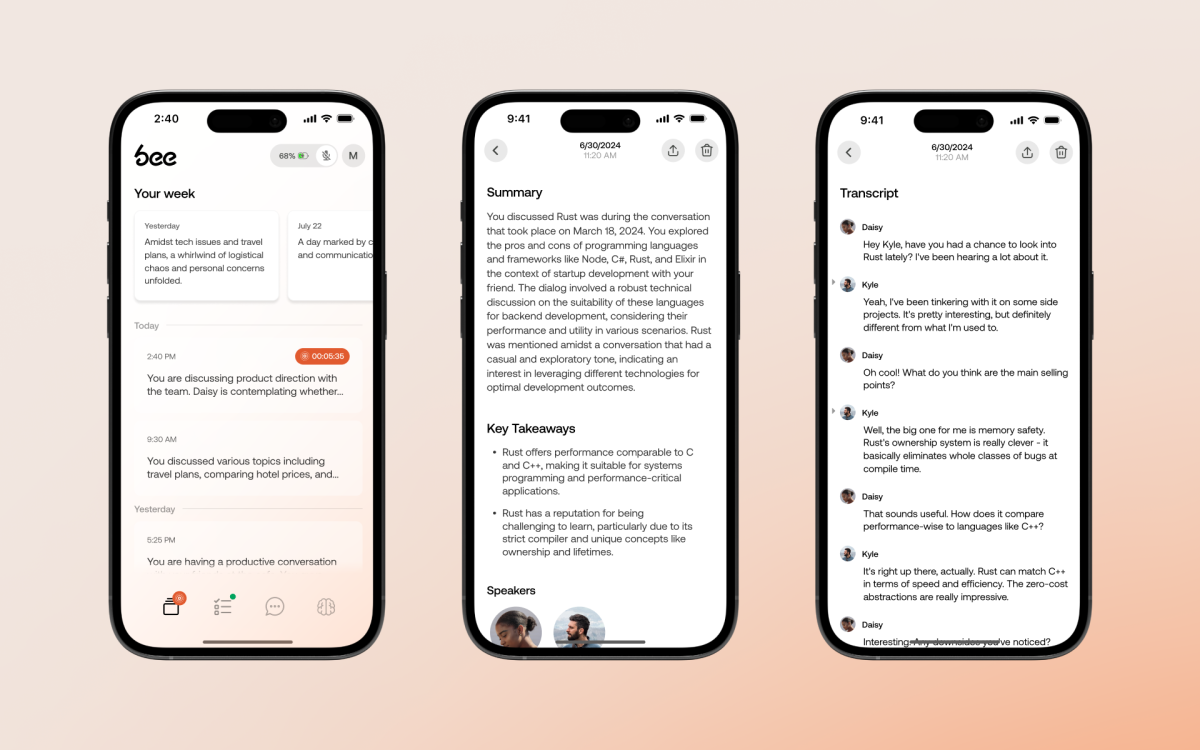
Much like other AI wearables, the Bee gadget acts as a personal assistant, adept at recording, transcribing, and summarizing conversations. For those seeking help remembering details or keeping organized, Bee appears to be a promising option. It can sync with your calendar, offering timely reminders for upcoming commitments.
The setup process for Bee is straightforward: simply turn it on, strap it to your wrist, install the mobile app, and provide initial personal settings. With the push of a button, you can activate the built-in recorder, with an indicator light flashing during recordings.
However, the convenience of recording everything raises concerns about personal privacy. In a digital age, having a gadget that captures audio can feel unsettling. Yet, it can provide an organized perspective in certain settings.
In professional scenarios where clarity is crucial, Bee could be an asset. I tested it during a work call after confirming I could record. The app delivered a succinct summary afterward, allowing me to focus on the conversation. While existing services offer similar functionalities, Bee shows potential, especially in the professional realm. Keeping Bee running throughout a busy day could aid those juggling multiple meetings, offering easy access to conversation summaries.
While the summarization feature is effective, the transcription aspect can be hit-or-miss. There are instances where key parts of discussions are not captured, necessitating manual input for clarity.
I also tried Bee during a casual movie night. Surprisingly, it categorized our discussion as “Tarantino Film Scene Analysis,” illustrating its ability to identify conversational context.
Despite its strengths in professional settings, using Bee in personal life raises concerns. The marketing of this wearable leans heavily toward personal use, which can be troubling for those wanting a boundary between their private lives and technology.
For optimal functionality, Bee requires extensive access to your mobile life: location data, photos, calendar events, and health metrics like sleep quality. The gathered information is stored in the cloud, raising questions about data privacy.
Bee promises encryption to secure user data both during transit and when stored. The company states that it employs technical measures and third-party security audits. However, there are lingering concerns about data management.
Ultimately, Bee is an intriguing gadget with the potential to enhance professional life through organization. Yet its invasive nature might not sit well with everyone in their daily living.
Key Takeaways
- User-Friendly Setup: The device is straightforward to configure, allowing for quick integration into daily routines.
- Utility in Professional Settings: Ideal for those needing assistance with meeting notes and conversation summaries.
- Mixed Results in Transcriptions: While summarization is competent, transcription accuracy may require user correction.
- Privacy Considerations: Users should weigh their comfort with extensive data permissions needed for optimal functionality.
- Data Security Measures: The company claims robust encryption and security checks, but historical concerns about data breaches should be noted.
- Potential for Personal Use: While marketed for personal use, the device’s constant recording capabilities might deter privacy-conscious users.
The post My Experience with Amazon’s Bee Wearable: Fascinating Innovation or Invasion of Privacy? appeared first on The Big.