


You may feel confident in your ability to spot online scams, especially those surfacing through platforms like Facebook Marketplace.
But the unfortunate truth is that people across various backgrounds and ages fall victim to these schemes every day.
It’s crucial to address a rising scam type particularly concerning for individuals who might be more vulnerable, such as those in our community who are middle-aged or older. Many have lost money due to deceptive tactics on Facebook Marketplace.
Let’s unpack this common scam and share some insights based on recent personal experiences.
Typical Scam Tactics
Last month, I decided to sell an old monitor on Facebook Marketplace. I provided clear details: the price, condition, my location, and several photos.
To my surprise, within moments, I received three messages that all seemed strikingly alike.
Each person first asked, “Is this item still available?”
Then, they inquired about the condition of the item, despite that information being clearly outlined in the listing. I initially brushed these off, assuming they were just casual inquiries.
However, a closer look at their profiles revealed something alarming. All three accounts were newly created, contained minimal activity, and were registered in locations far from my home in Tampa, signaling clear red flags.
Things turned odd when we tried to arrange the sale.
Each prospective buyer insisted that a relative would be picking up the monitor. I grew suspicious, and when they all requested to use Venmo instead of cash, I realized I was dealing with scammers. When I insisted on cash, two of them blocked me immediately. The third, though, I decided to engage further.
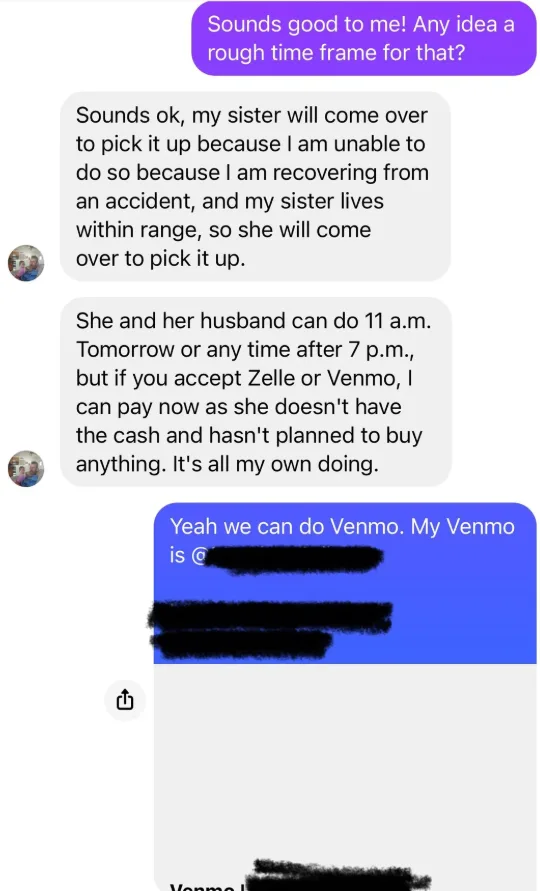
This individual sent me a screenshot showing an error while trying to send money, claiming I needed to set up a business account for the transaction to go through.
Shortly after, I received a bogus Venmo email requesting additional funds to complete the business setup.
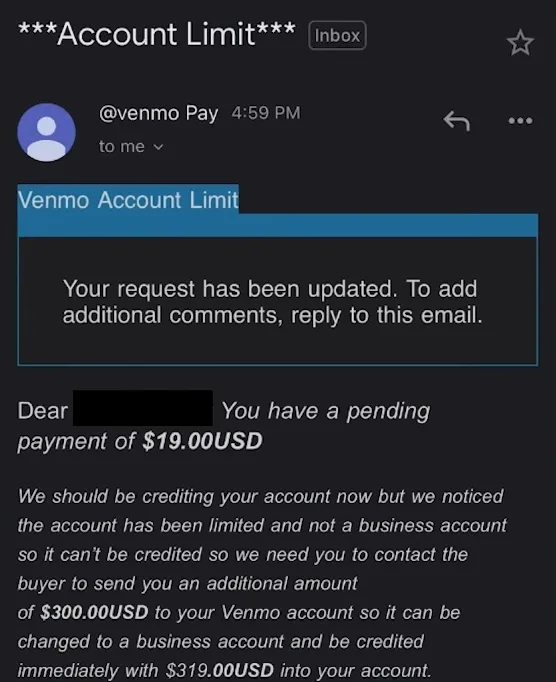
Notice the poorly constructed language in that email. Genuine correspondence from Venmo would use clear, professional phrasing and only be sent from an official corporate email address ending in @venmo.com. Real support staff seldom contact customers over such matters.
A variety of scams exist. Sometimes they’ll claim you need to “expand” your account, always suggesting there’s some hidden reward waiting for you.
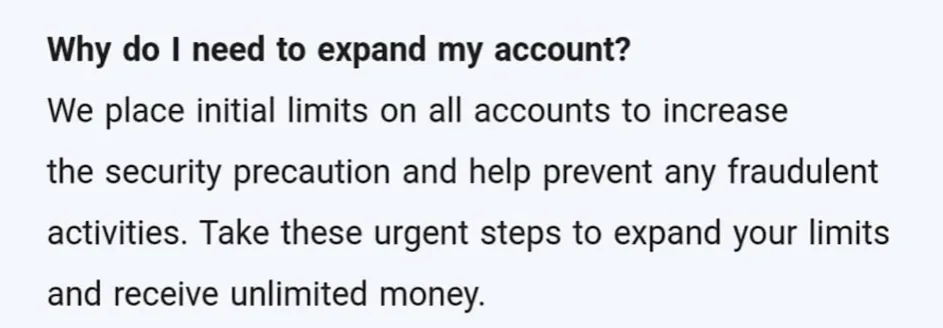
Pay attention to how sloppily that text is composed; phrases like “the security precaution” suggest a fabricated scenario. Hyperbolic claims, like “urgent steps” to earn “unlimited money,” should always be treated with skepticism.
Such sniper techniques have gained notoriety in recent years. Many scams originate from organized crime networks in Southeast Asia. Others are committed by individuals acting alone or coordinated teams.
Scammers are well-practiced, and they thrive off of others’ missteps. Always be wary of any complicated transaction process. A straightforward exchange should involve meeting in person, inspecting the item, and handing over cash.
Why This Matters
A recent study by TSB Bank’s fraud team revealed that over a third of Facebook Marketplace listings are fake. Categories like automotive products and clothing show the highest prevalence of scam tactics. Users should be prepared for increased scams across all types of listings.
According to the Federal Trade Commission, fraud losses exceeded $12.7 billion, with a significant portion originating from social media. More than one-third of respondents reported having lost money to scams.
Protect Yourself from Scams
First off, insist on cash transactions only.
There should be no requests for account setups or confirmation codes.
Watch for convoluted narratives or excuses from sellers.
Examine the buyer’s profile closely. If it appears new and lacking activity, consider that a warning sign.
Should someone offer to send you extra money for a courier, approach with caution; this could lead to getting scammed with a bad check.
Keep in mind that Venmo and PayPal do not require modifications for regular use.
A quick phone call can help clarify intentions. If the buyer hesitates, that’s another signal to be wary.
When I list items, I often phrase “cash only.” While it may not deter all scammers, it does make the process more straightforward.
Lastly, if you see repetitive messages asking if the item is available, it’s likely that automated bots are scanning listings. They often employ generic phrases.
Trust your instincts and safeguard your personal information. Remember: real transactions should be cash and face-to-face.