

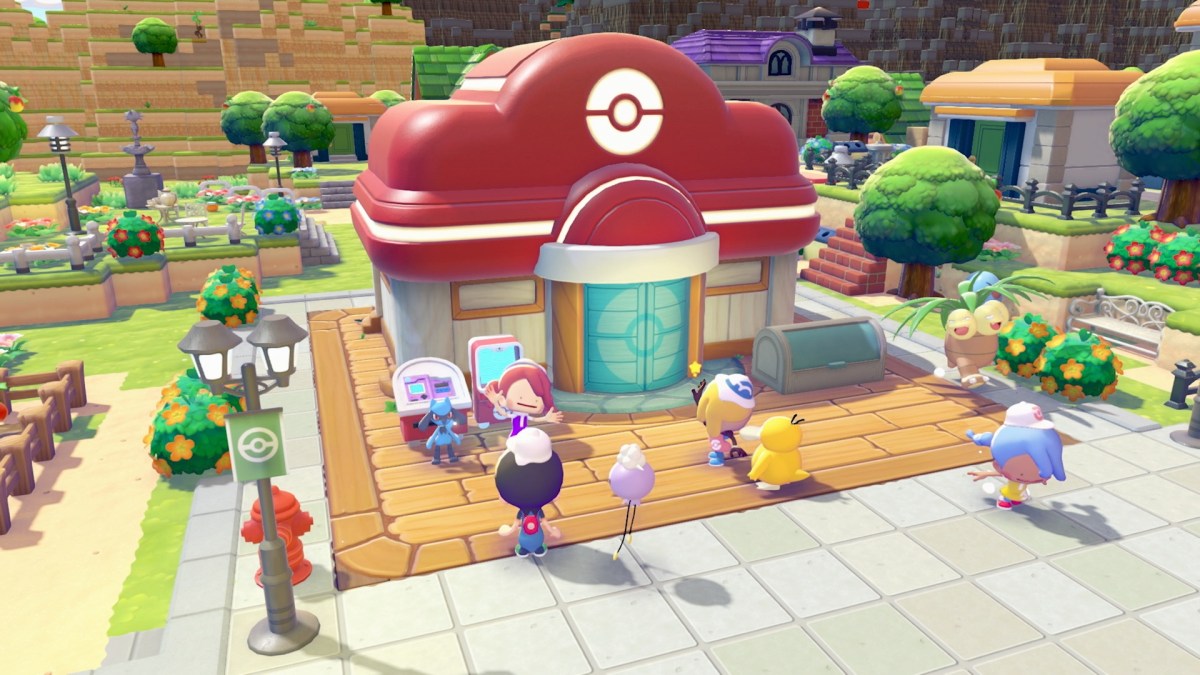
One evening, my boyfriend and I settled in for a cozy night on the couch. As we flipped through channels, I launched into “Pokémon Pokopia,” the latest addition to the beloved franchise that offers a fresh take on life simulation. My experience revealed a game that stands apart in an already vast Pokémon universe.
As I played, I shared my ongoing challenges and triumphs in creating safe spaces for my Pokémon companions, which is a key aspect of the game.
“Onix is trapped in a cave, and we can’t break the walls, so Squirtle came up with the idea of throwing a party to create rain and soften the rocks,” I explained to my boyfriend. “We need to ask Professor Tangrowth what ‘party’ means!”
After considerable efforts, I finally succeeded in making it rain and awakening Kyogre. However, my buddy Charmander, who affectionately refers to me as “bestie,” reminded me that rain extinguishes its fiery tail flame. Hence, I had to construct a small shelter with support from Timburr and Hitmonchan.
Before I knew it, the clock struck 11:30 p.m. I snapped back to reality when the baseball game ended, only to find my boyfriend dozing beside me.
I was so absorbed in my quest to build habitats for my Pokémon that I completely missed my boyfriend’s rest. I had been narrating my strategy for restoring a seaside habitat for Magikarp while he quietly drifted off. It felt strange to realize that I was so engaged that I didn’t realize he had fallen asleep. In my defense, the plight of Onix was incredibly captivating!
“Pokopia” feels like a combination of “Animal Crossing,” “Stardew Valley,” and “Minecraft,” all set in a post-apocalyptic version of the Kanto region. Given the somber backdrop, the game somehow maintains a cozy vibe that makes it all the more intriguing.
I’m not the only one swept up in “Pokopia.” Its popularity has exceeded forecasts, leading retailers to increase the price of physical copies by $10. As the first exclusive for the Switch 2, it’s causing many to consider upgrading their systems.
Compared to the recent main series games like “Pokémon Scarlet” and “Pokémon Violet,” which received mixed reviews due to bugs and an underwhelming open-world feel, “Pokopia” is a refreshing return to form. As a longtime Pokémon enthusiast, I’ve found the latest titles enjoyable but often lacking post-story engagement. However, “Pokopia” has blown my expectations away with its depth and attention to detail.
The game includes four main regions and a sandbox version of Palette Town. I’ve logged about 20 hours since it launched a week ago, and I feel like I’m barely scratching the surface of the main story. The gameplay feels expansive, and I wouldn’t be surprised if the developers introduced additional regions as downloadable content, a purchase I’d happily consider despite the already premium price tag of $70.
It’s rare for a game to capture my focus like this. The experience evokes a similar emotional response to when “Animal Crossing: New Horizons” first dropped, but thankfully, we aren’t in a pandemic this time.
While the world has seen improvement since then—thanks to COVID-19 vaccines—many challenges remain. Political strife and climate change continue to loom large.
Unlike “Animal Crossing,” which serves as pure escapism, “Pokopia” subtly reflects issues in our reality. In this ravaged version of Kanto, you assume the role of a Ditto transformed to resemble its long-lost trainer. All humans appear to have vanished, and during exploration with Professor Tangrowth, you discover the remnants of a world that once thrived.
The gradual revelation of what led to Kanto’s downfall adds layers of intrigue. Diary entries, newspaper clippings, and letters reveal a catastrophic climate incident responsible for humanity’s disappearance. Familiar Pokémon appear altered: Pikachu becomes a diminished “Peakychu,” lacking its electric abilities, while Snorlax has become an integral part of a cave, draped in moss. Creepy yet fascinating.
Amidst this unsettling context, the narrative deepens with references to societal changes. One note from an old Poké Mart highlights the decline of music streaming services due to rising server costs, humorously reminding players of the past era of CDs.
This commentary resonates in our current world. With the burgeoning demand for AI tools, there’s a surge of energy-intensive data centers emerging, raising concerns about environmental sustainability and resource management. It’s interesting to see Nintendo engage in such relevant topics through playful messaging in “Pokopia.”
While “Animal Crossing” offers a means of escape, “Pokopia” allows players to engage in the rehabilitation of a fractured world. The image of a devastated Vermilion City adds gravity to your efforts; restoring electricity and bringing light back to the area is both a daunting and gratifying journey.
At its core, “Pokémon Pokopia” is more than just a game; it serves as a thoughtful exploration of rehabilitation, both in-game and beyond. Here are some points to ponder: