

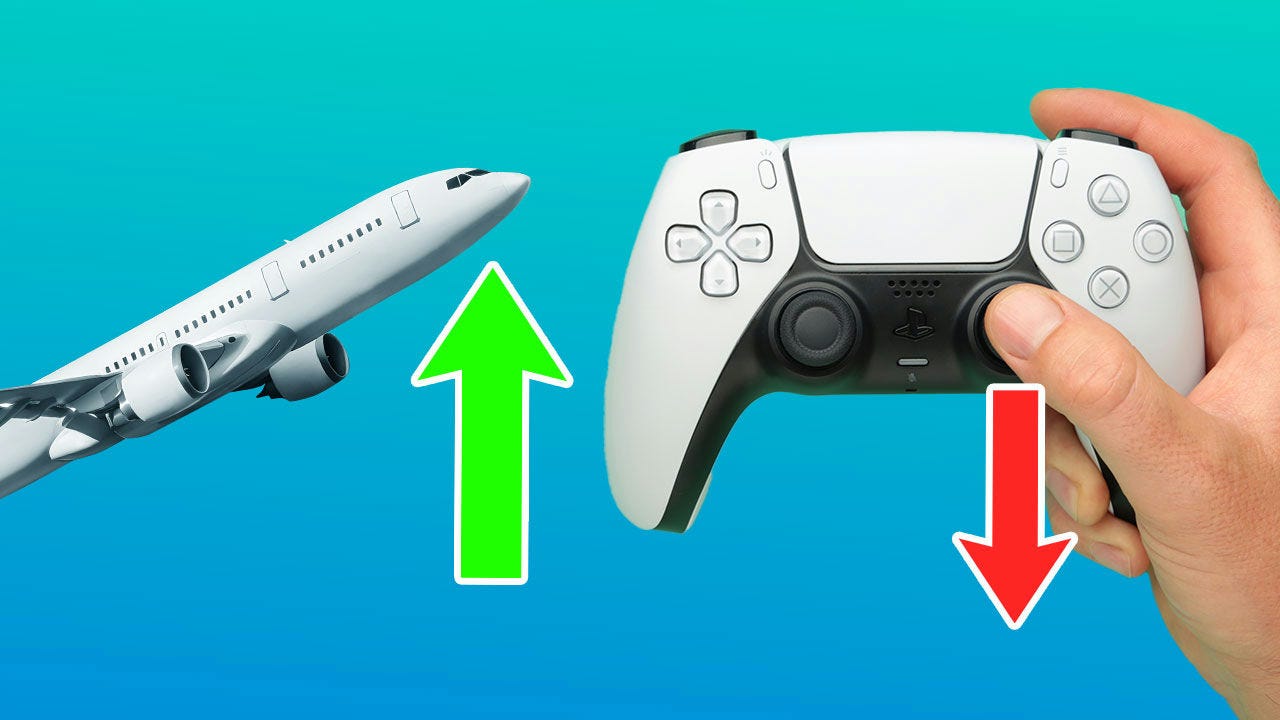
For many, inverting controls isn’t a mere preference; it feels like second nature. Pressing forward on a joystick to look downward is as intuitive as walking. Yet, a wave of misconceptions surrounds this choice, perpetuated by assumptions from both sides. A recent study revealed that the reasons behind the preference for inverted controls don’t stem from playing specific types of games, like flight simulators in childhood, nor are they as straightforward as many believe.

According to the study, the inclination to invert controls may be deeply rooted in the unique wiring of one’s brain and its spatial awareness capabilities. While it’s possible for some to retrain their instinctual responses, the decision often serves as both a personal preference and an accessibility concern, with implications extending beyond gaming to areas such as drone operation and telesurgery.
Probing deeper into anecdotal evidence, a poll from some industry staff revealed that a fraction were inverters, suggesting no clear trends aside from their age. Most inverters shared one trait: they had engaged with video games extensively during the late ’90s and early 2000s, a time when popular games operated on inverted defaults.
Such defaults were common back then, often arising because developers didn’t provide options for customization, forcing players to adapt to whatever configurations were set. As gaming has evolved, these conventions became more standardized, commonly favoring how most users intuitively perceive control mechanics, especially with modern titles that cater to both inverted and non-inverted preferences.
In this evolution, *Halo: Combat Evolved* stands out for incorporating innovative methods to accommodate player preferences seamlessly, ultimately paving the way for more inclusive gaming experiences. Options available now allow for greater personalization to enhance user satisfaction, reflecting the changing landscape where consideration for diversity in gameplay is becoming increasingly commonplace.
While diving into the depths of why some players opt for inverted controls remains somewhat elusive, it highlights the complexities of user experience in gaming. The lighthearted jibes exchanged between inverters and non-inverters merely scratch the surface of a broader conversation about the importance of addressing diverse player needs in video game design.
Gaming, after all, is about enjoyment, and that means recognizing that comfort in control schemes—no matter how different—needs to be valued.