


For avid followers of Magic: The Gathering, maintaining awareness of the game’s evolving landscape can often feel daunting. With seven new sets slated for release in 2026 alone, players face an impressive backlog comprising over 30,000 unique cards. In this atmosphere of complexity, some noteworthy cards may fade into obscurity.
One such example is the “Dreams” cycle from the Torment set, featuring seven intriguing cards that have surprisingly gained little traction in Commander. This raises eyebrows among dedicated players eager for strategic depth.
Initial Impressions
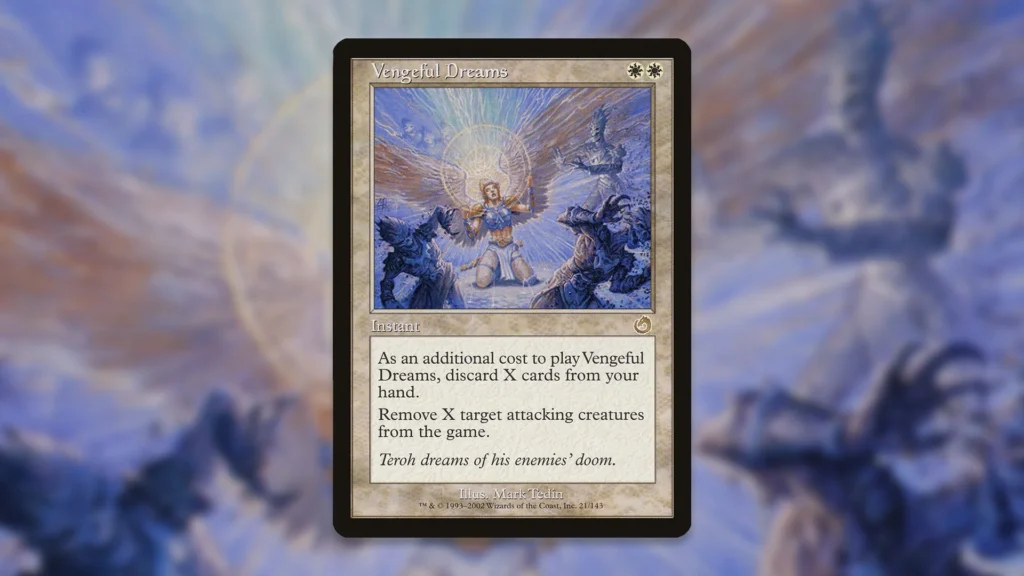
While some cards in the Dreams cycle have their merits, others evoke skepticism. Take Vengeful Dreams, for instance; its high cost of discarding a number of cards makes it quite a gamble. In favorable scenarios, it can exile up to seven attacking creatures—but at the severe cost of depleting your hand. In Commander, this means a player might quickly fall to another opponent’s counter-attack.
Politically, Vengeful Dreams can be leveraged against opponents who aren’t targeting you, but this drawback means it often remains underused. Other cards in the cycle provide more straightforward benefits.
Ascending Potential
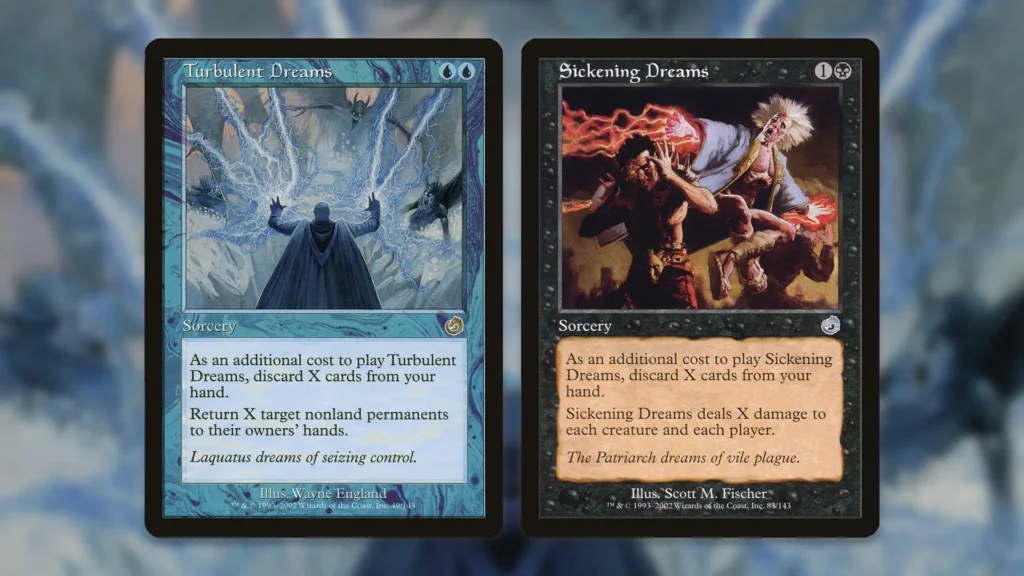
Turbulent Dreams clearly shines as a more versatile option than Vengeful Dreams. Although classified as a sorcery, its targeted abilities simplify gameplay considerably. Players can explore intriguing synergies that exploit self-bouncing mechanics.
Turbulent Dreams enjoys higher play rates in discard-centric decks, particularly among blue options. Utilizing cards that trigger upon entering the battlefield can exponentially increase their power.
For those seeking reliable removal, Sickening Dreams should not be overlooked. Combining the effects of a board wipe with potential player damage can create shockingly powerful situations.
Utilitarian Aspects
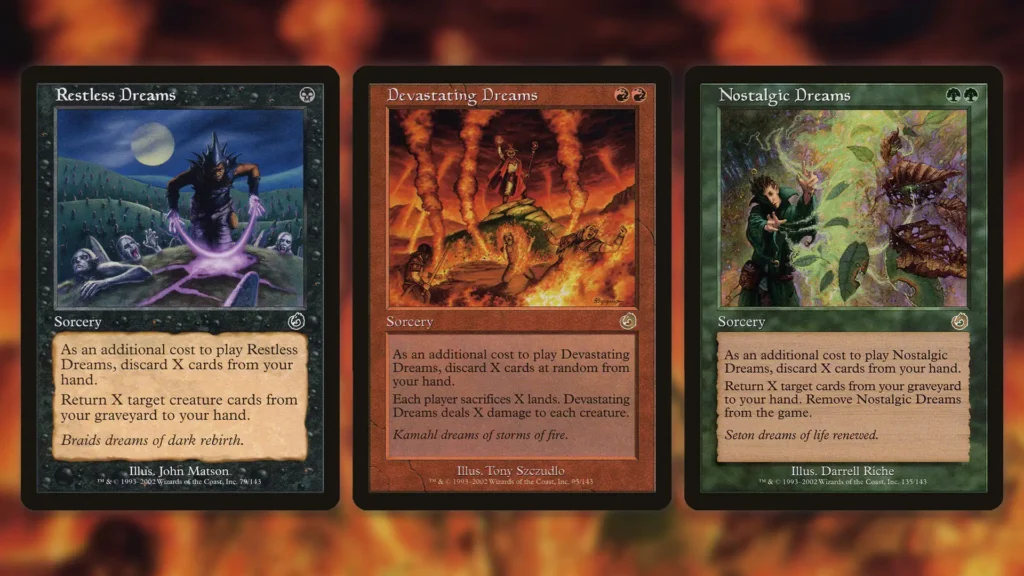
In reanimator decks, Restless Dreams and Nostalgic Dreams provide valuable recursion options. Both spells allow players to replace less effective cards with those that can make a significant impact. Their true value is particularly evident in Golgari-focused builds.
Nostalgic Dreams stands out due to its broader use cases, allowing for the return of various card types. This adaptability has made it popular in several archetypes. Meanwhile, Devastating Dreams struggles with adoption, likely due to its symmetrical destruction mechanic. However, clever strategies can navigate this challenge.
Leading the Pack
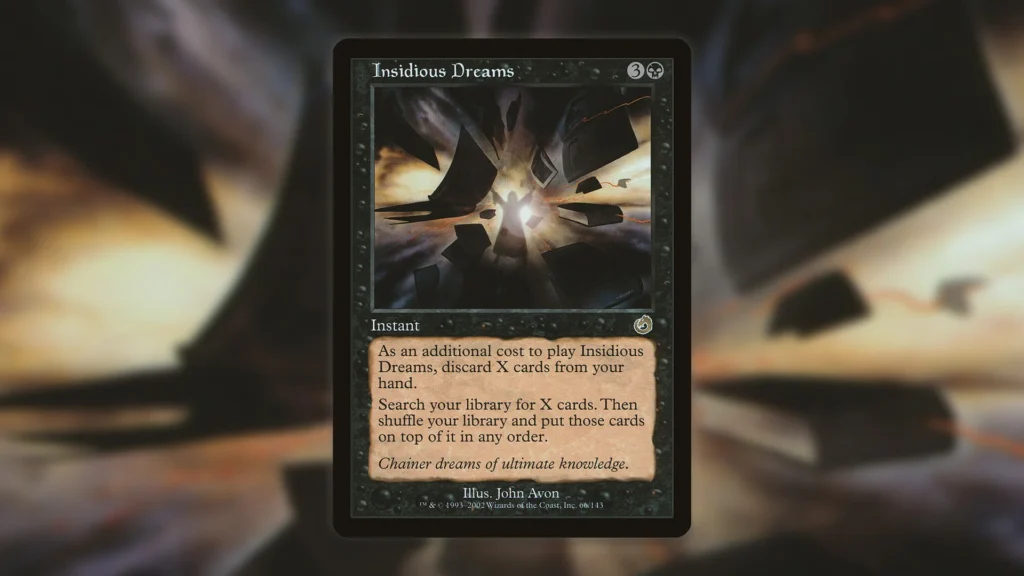
Among all the cards in the Dreams cycle, Insidious Dreams stands above the rest. It has established itself as the most desirable and widely used card in this series, serving as a powerful tutoring option. Its ability to exchange unneeded cards for relevant ones can significantly shape the course of a game.
While its mana cost is on the higher end for tutors, it allows players to systematically build toward game-ending strategies. This card especially shines in decks that capitalize on precisely chosen threats.
A Wealth of Options
Despite their discarding costs, the Dreams cycle presents players with a myriad of strategic possibilities. Most cards remain remarkably affordable, with several priced under $1.
While some cards are slightly pricier—hovering around the $2 mark—Insidious Dreams commands about $14. Still, its impact in the right context can justify that cost. Currently, it appears in roughly 7,200 Commander decks, indicating that demand for these cards may lead to future price spikes for the rest of the cycle.
Key Takeaways
- The landscape of Magic: The Gathering is constantly evolving, requiring players to stay updated on new and existing cards.
- The “Dreams” cycle from Torment showcases diverse gameplay options, though several cards remain underutilized.
- Policy and gameplay skills are essential for effective use of more complex cards, particularly within Commander formats.
- Understanding synergy and the unique capabilities of each card can lead to rewarding gameplay experiences.