

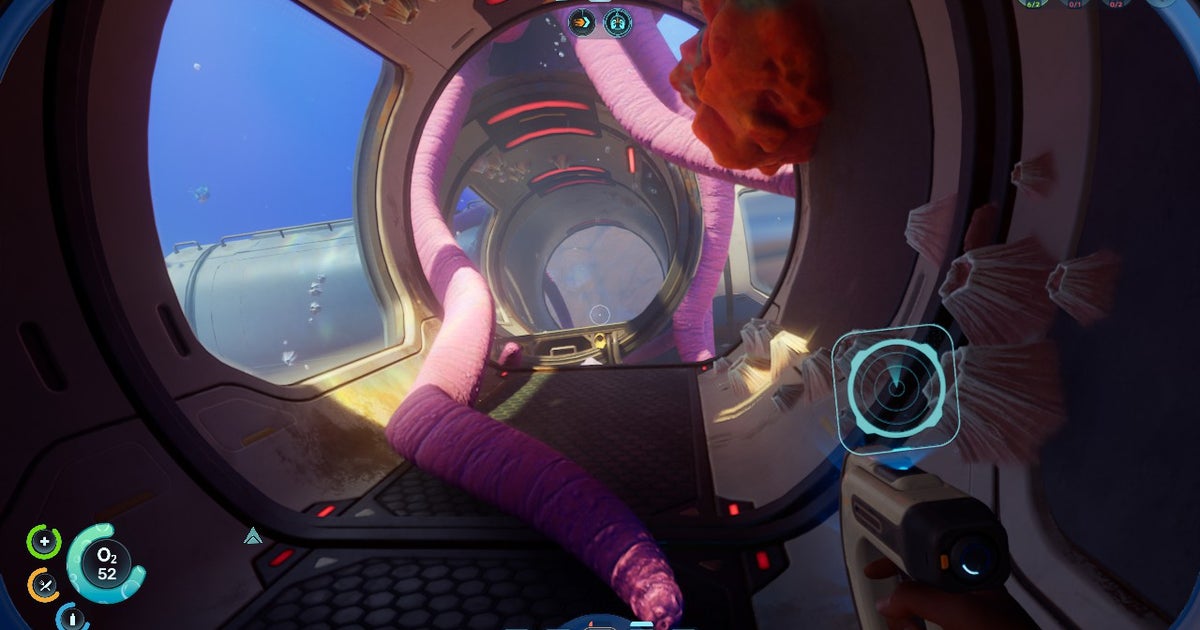
Moderate spoilers for Subnautica 2’s early access storyline follow.
Subnautica 2 invites players into a mesmerizing duality—one world where ancient beings flourish amid the depths and another where the player becomes both an observer and an active participant in survival. As I navigate through its vividly crafted aquatic sceneries, I routinely encounter bustling marine life, vibrant biomes teeming with life, and remnants of human presence, all while grappling with the rules that govern this expansive, unforgiving environment.
This conflict is eloquently addressed through an exploration of the underlying themes of agency within gaming narratives. Conventional open worlds often revolve around a player’s perceived superiority over their environments, creating an illusion of vitality when characters and settings come alive only at the player’s presence.
The absence of traditional weaponry in Subnautica 2 feels deliberate and profound. Players are constructed as “clones,” commissioned by an intelligent AI named Noa, tasked with unraveling the fate of previous explorers—offering a stark contrast to typical hero narratives and steering players towards their own fragility in this aquatic expanse.
Subnautica 2 evolves away from typical gameplay tropes embracing violence. The game entwines its narrative with the exploration of tensions between human characters and indigenous organisms. Questions about autonomy and purpose emerge, integrated with the vast landscapes of the ocean. The narrative unfolds like a tapestry, with each character, decision, and biome carrying significance beyond mere mechanics.
One might expect a traditional hero’s journey filled with quests and conquests, yet Subnautica 2 cleverly sidesteps these clichés, leading players into a more reflective and ethical gameplay experience. This shift invites players to engage with its ecosystem on a more personal level, showcasing the challenges of open-world constructions while rethinking interactions with digital environments.
The absence of weapons may disorient those who thrive in open-world scenarios. By opting out of traditional combat, Subnautica 2 fosters a less confrontational relationship with its inhabitants, challenging common perceptions while intertwining player actions with broader implications.
The evolving dynamics of the aquatic ecosystem reflect deeper philosophical questions, leading players to reconsider their role within the game and the premise of exploration itself. By creating living habitats that thrive irrespective of player intervention, the game champions coexistence and understanding, inviting players to interact with their surroundings.
Key Takeaways
- Subnautica 2 subverts typical gameplay with minimal emphasis on conflict, challenging players’ expectations of open-world exploration.
- It encourages different interactions with the environment, focusing on coexistence rather than conquest.
- The narrative explores themes of agency and control, inviting reflection on player roles.
- Encounters and events unfold dynamically, allowing the world to act independently of the player.
- Engagement with complex moral implications can lead to a more immersive experience.