

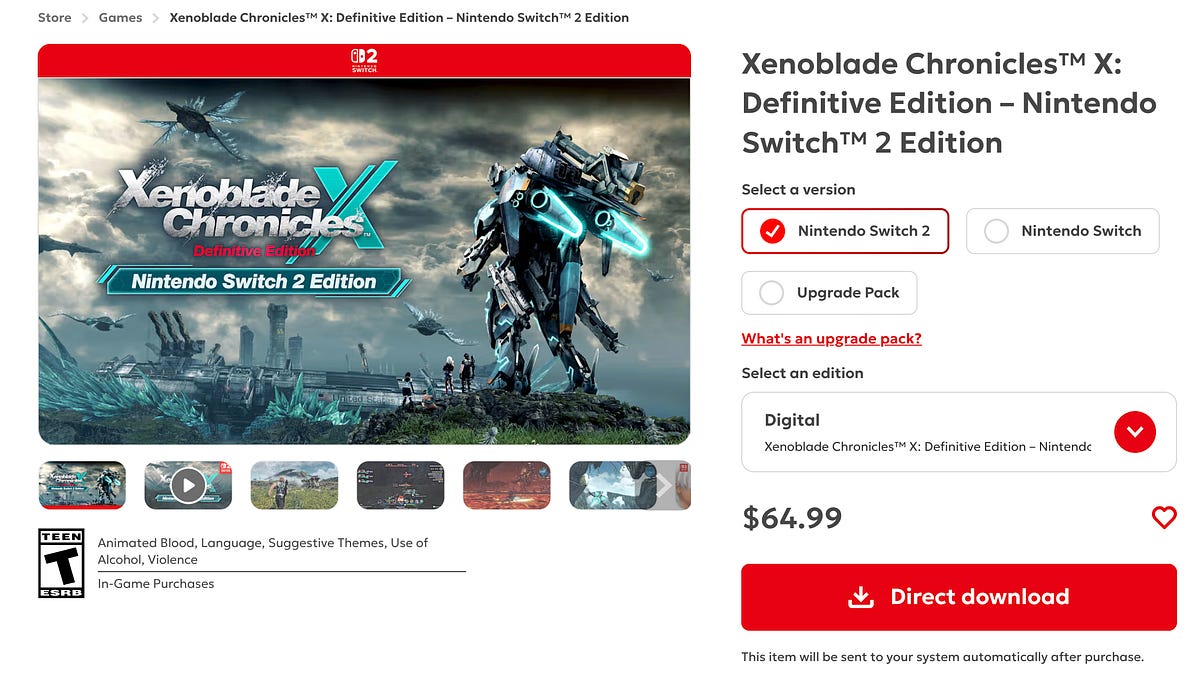
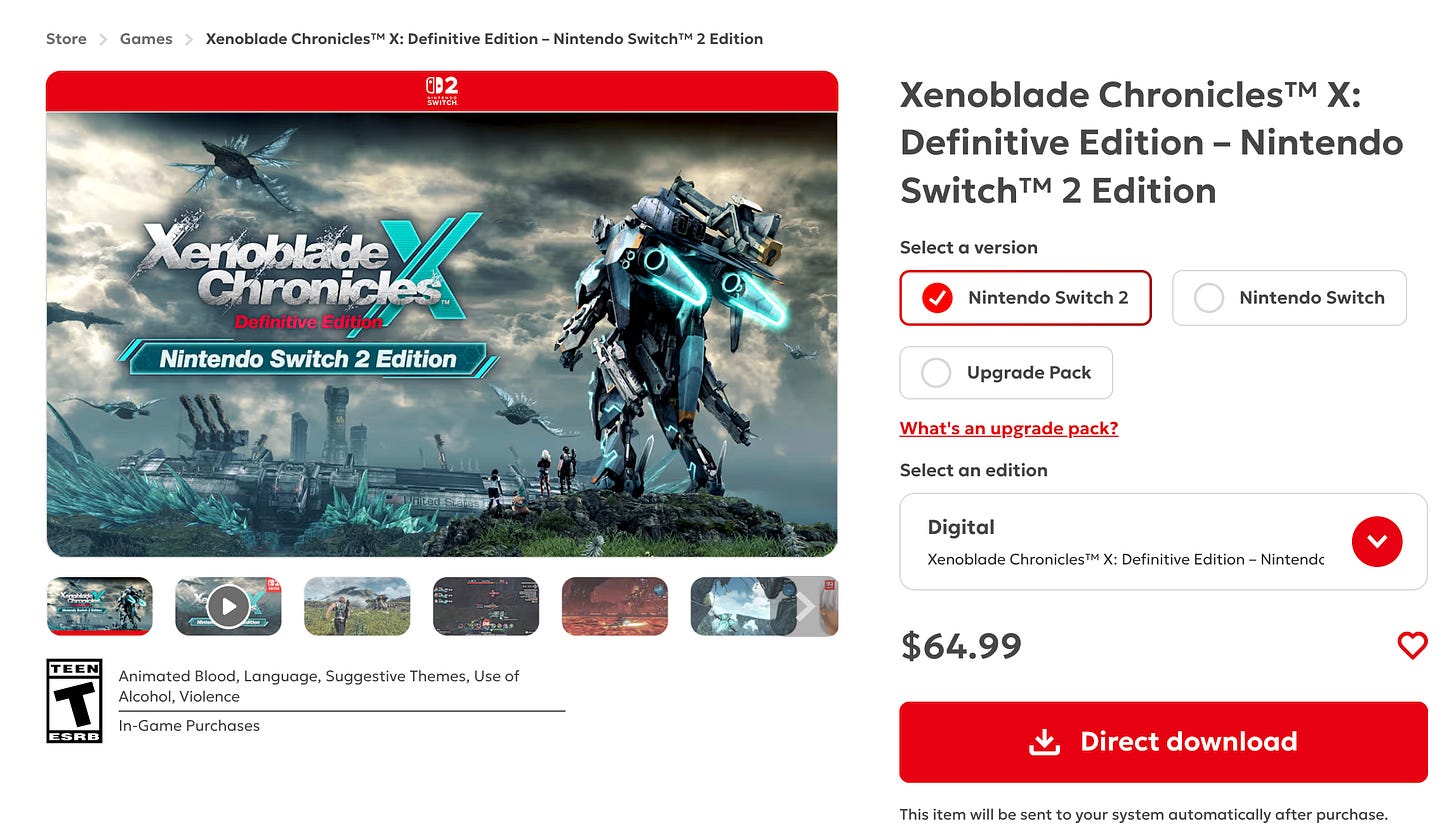
Nintendo has stirred excitement with the unveiling of the Xenoblade Chronicles X Definitive Edition for Switch 2. Key elements include:
- The visually upgraded version is available for download.
- The title uses “edition” twice.
- It’s priced at $64.99.
The $65 price raises eyebrows in today’s competitive gaming market:
- $60 has been the standard for high-end titles on platforms like the Switch.
- $70 is typical for PS5 and Xbox Series titles, and was the price of the acclaimed “The Legend of Zelda: Tears of the Kingdom.”
- $80 was set for Mario Kart World, though Microsoft backtracked on a similar price increase.
The emergence of a $65 price point prompts debates about the future of game pricing. For instance, titles like Clair Obsur: Expedition 33 thrived at $50, while NBA 2K’s “superstar editions” reach $100.
Earlier, a similar $65 version of Animal Crossing: New Horizons hinted at a trend in premium gaming.
Nintendo’s pricing strategy remains tight-lipped but reveals insights into the cost differences between re-releases. Both titles previously retailed for $60 and are now upgraded with a $5 fee.
Nintendo has also charged varying amounts for upgrades enhancing graphics without new gameplay features. Last fall, big-name games were priced differently based on minor improvements, reflecting confidence in commanding a premium.
The company’s cautious $5 increase contrasts with other titles that may charge $20 for substantial new content.
As Nintendo explores this new price point, it continues to adapt its strategies. The evaluation of gameplay depth, longevity, and overall experience are critical for determining prices.
Nintendo’s choice to introduce a $65 price raises questions for consumers and critics regarding future game pricing.
Key Takeaways
- Nintendo’s $65 for game upgrades presents a unique strategy in today’s competitive landscape.
- Historic shifts in price norms complicate contemporary consumer expectations.
- The company’s varied upgrade approach challenges players to evaluate value and content.
- Discussions around video game pricing show shifting dynamics within the gaming community.
- Nintendo’s innovations continue to redefine costs and perceived value in gaming experiences.