

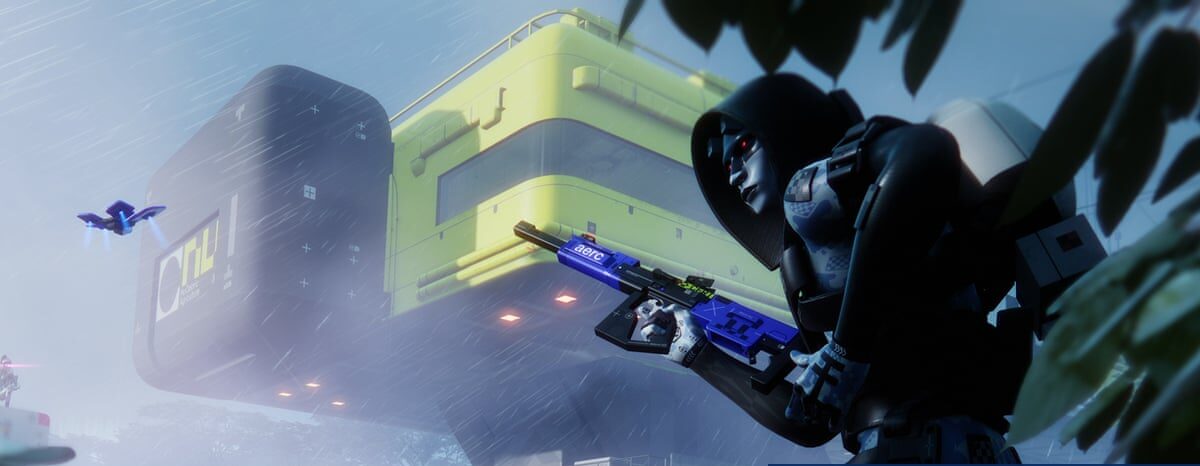
Amid the action-packed chaos of Marathon, players might occasionally find a tranquil moment on the vividly crafted world of Tau Ceti IV. With its dreamy pink skies and brilliantly bizarre green flora, the environment resembles a vibrant painting, pulsating with neon aesthetics. However, basking in this surreal beauty can quickly lead to dire consequences; lingering too long might make you an easy target, resulting in your character’s grim demise, marked by a blue, oozing substance. Marathon’s stunning visuals stand in stark contrast to its cold-hearted gameplay.
The journey to the launch of Marathon has been anything but straightforward. This extraction shooter—where players engage in intense skirmishes and looting before attempting to flee—first generated buzz in 2022 through a captivating trailer. Featuring robotic entities resembling silkworms creating synthetic forms, the game emerged from the minds behind Halo and Destiny. This unique visual style attracted excitement from both traditional shooter fans and those appreciating innovative art games.
Yet, as the excitement built, turmoil ensued: Marathon found itself at the center of controversy surrounding alleged art theft, and feedback from an alpha test prompted a pushback of its release, originally slated for the preceding September. During this stretch, another extraction shooter, Arc Raiders, debuted and garnered positive reviews and impressive sales.
With so much at stake, Marathon arrives under the watchful eye of its new owners at Sony, following a hefty acquisition of Bungie valued at $3.6 billion in 2022. This comes at a time when the studio grapples with the repercussions of other costly ventures, including numerous canceled projects and one major failure amidst a major shift toward online multiplayer.
Boasting adrenaline-inducing combat and a gripping sci-fi atmosphere, Marathon might still shift the narrative for Sony. Players assume the role of a Runner, whose essence has been transported into a cybernetic body. This concept of body-swapping offers a paradoxical form of immortality, but players soon learn that this eternity often leads them into a purgatorial existence, constantly battling for survival on Tau Ceti IV.
In a recent round, I found myself deployed in Dire Marsh, a dim, foggy level true to its dreary reputation. My team and I navigated through a maintenance sector, searching for an enigmatic metal rod. We faced relentless mechanical foes; I was downed, revived, and pursued our objective until frustration drove us away. As we approached our escape route, another team of Runners ambushed us, igniting a tense, heart-pounding encounter. At my most vulnerable moment, right as a rival player struck me down, they laughed, shouting “Mr. Silly.” Thank you, Mr. Silly; your name is forever etched in my memory.
Marathon challenges players with relentless gameplay, feeling more punishing than its competitor, Arc Raiders. The strength of Arc Raiders lies in its ability to inject varying levels of drama through player interactions, allowing negotiations ahead of engagements or even during the heat of battle. Outcomes are decided not just by a player’s skill or inventory but also by their willingness to communicate and collaborate. Here, diplomacy and evasion are as important as raw firepower.
So far, Marathon feels more rigid and less intriguing. Communication takes a backseat as a fierce independence dictates player interactions. This competitive spirit seems amplified by its dystopian setting, raising the question of whether newcomers to the genre may tire of such a cut-throat approach.
However, after 15 hours of engaging gameplay, there’s something captivating about the unwavering intensity. Marathon mirrors our current climate, resonating in a world where self-interest often reigns. It offers an unsettling yet familiar lens through which to navigate this harsh reality: either you are aiming for victory—or you’re left in the dirt, hoping for a second chance.