

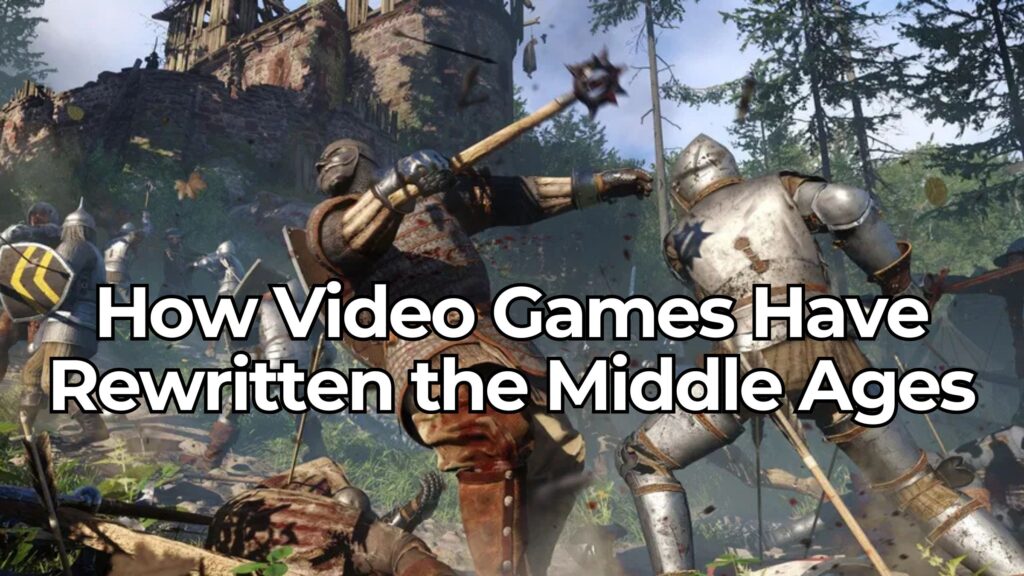
For many today, the Middle Ages are not first explored through books and lectures but rather through engaging video games. Titles like Assassin’s Creed, Crusader Kings, and Age of Empires provide a captivating way to navigate castles, command armies, and govern kingdoms in their digital renditions of this historical period.
These games influence how contemporary audiences visualize medieval history, prompting scrutiny of the accuracy and implications of these portrayals. The concept of “ludic medievalism” delves into how gameplay mechanics reshape historical narratives. Unlike passive mediums, video games force history into interactive formats—be it in combat, diplomacy, technology, or governance—creating experiences that often diverge from historical realities.
Warfare Takes Center Stage
Video games frequently characterize the Middle Ages as a brutal era dominated by conflict. From strategy games like Medieval: Total War to hack-and-slash titles, combat remains the primary lens through which players engage with this world. This emphasis can intensify perceptions of the Middle Ages as filled largely with strife, as mechanics tied to gaming create a necessity for clear objectives, often leading to combat as the main means of interaction.
The Singular Impact of Historical Figures
Many titles lead players to believe that pivotal moments in the Middle Ages stem from powerful rulers or significant heroes rather than broader societal forces. In strategy games like Crusader Kings, players guide dynasties through warfare and political maneuvering, focusing on character-driven arcs where the fate of kingdoms hinges on individual actions. This approach simplifies a complex past featuring a myriad of contributing factors.
Rulers with Impressive Authority
In numerous games, medieval kings and nobles seem to exercise almost unlimited power. Titles such as Age of Empires II depict players as omnipotent leaders capable of commanding all aspects of their realms. However, this portrayal is misleading; real-life medieval rulers were often constrained by local laws and powerful nobles, making governance far less straightforward.
Strategy Games and Controlled Progression
Video games often transform history into a manageable enterprise. In the strategy genre, players engage in an ongoing cycle of expansion and development, gathering resources and managing armies. Many games represent history as a linear progression of technological advancement, which is misleading, as real history involves unpredictable factors and uneven advancements.
Technology in a Straight Line
The progression of technology in video games generally appears methodical and uncomplicated. Players unlock innovations sequentially, creating the impression that development is unidirectional. In contrast, actual advancement during the Middle Ages was erratic and complex, with various regions adopting innovations at different rates.
The Simplistic View of Religion
Religion is often presented in a straightforward manner in these games, reduced to systems players can manipulate. Developers frequently use recognizable symbols of faith while relying on stereotypes about the Church, which may distort its true influence on society.
A European-Centric View
Many video games tend to restrict the geography of the Middle Ages to primarily European contexts, focusing heavily on European narratives and marginalizing other cultures.
Merging History with Fantasy
Often, video games dissolve the line between medieval history and fantasy, creating settings filled with knights, castles, and magical creatures. While players might recognize some elements as fictional, the accompanying societies can appear historically plausible, further complicating public perceptions of the Middle Ages.
An Interactive Exploration
Video games uniquely allow players to explore medieval environments firsthand, making the past feel accessible and engaging. Unlike traditional media, gamers navigate streets and landscapes rather than passively observing events.
An Active Role in History
Video games allow players to reshape historical narratives through their choices. In games like Crusader Kings III, decisions can lead to different outcomes than those recorded in history, offering new perspectives on the medieval experience. This flexibility contrasts sharply with fixed narratives typical of books or film.
Video games have significantly altered the way we perceive the Middle Ages, shaping ideas about violence, governance, and societal interactions. Critical engagement with these portrayals can deepen understanding of how video games influence and reshape historical perspectives.
Key Takeaways
- Video games are now a primary means of engaging with medieval history, shaping perceptions through interactivity.
- Themes of warfare dominate many games, promoting an image of the Middle Ages steeped in violence.
- The portrayal of historical figures often suggests individual actions drive history rather than broader societal forces.
- Rulers in video games are depicted as having nearly absolute power, mismatching historical reality.
- Many strategy games simplify technological progression, presenting it as linear rather than complex and unpredictable.
- The presentation of religion in games tends to be oversimplified, reducing its multifaceted historical significance.
- Video games often focus on a European-centric narrative, sidelining contributions from other cultures.
- The blending of fantasy with history creates misleading portrayals of the medieval era.
- Gamers immerse themselves in historical environments, making past societies feel more tangible.
- Players can significantly influence historical narratives through their choices in games, challenging fixed representations.