

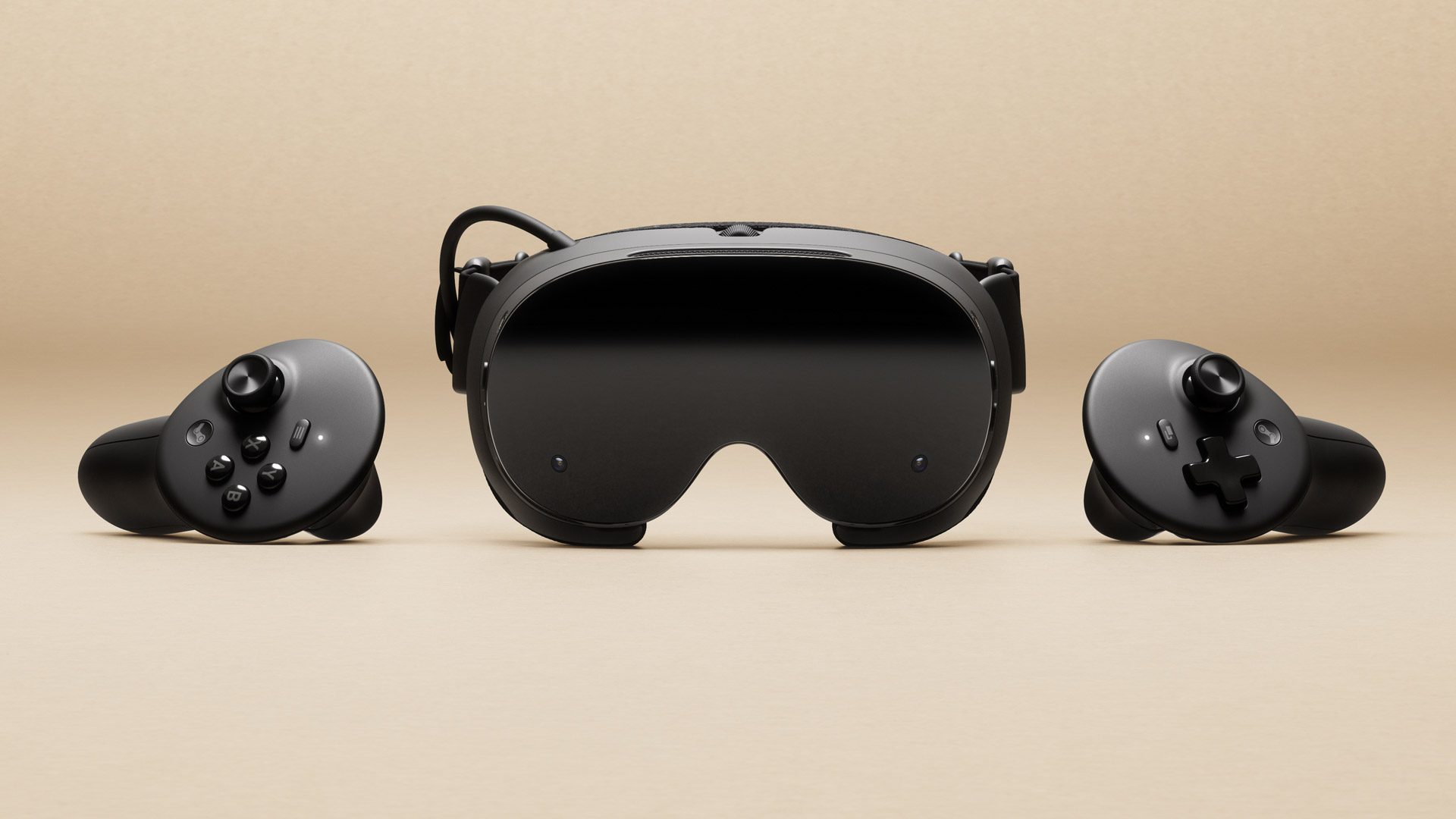
Valve has disclosed essential criteria for games aspiring to work with the forthcoming Steam Frame headset, particularly for those seeking the esteemed ‘Steam Frame Verified’ designation.
Latest Developments
During a presentation at the Game Developers Conference (GDC), Valve clarified two performance metrics that games need to achieve in order to qualify for the verification badge. For titles that operate natively on the headset, Valve recommends that virtual reality games target a minimum of 90 frames per second (fps). This benchmark significantly exceeds the minimum frame rate requirement of 72Hz on the Steam Frame.
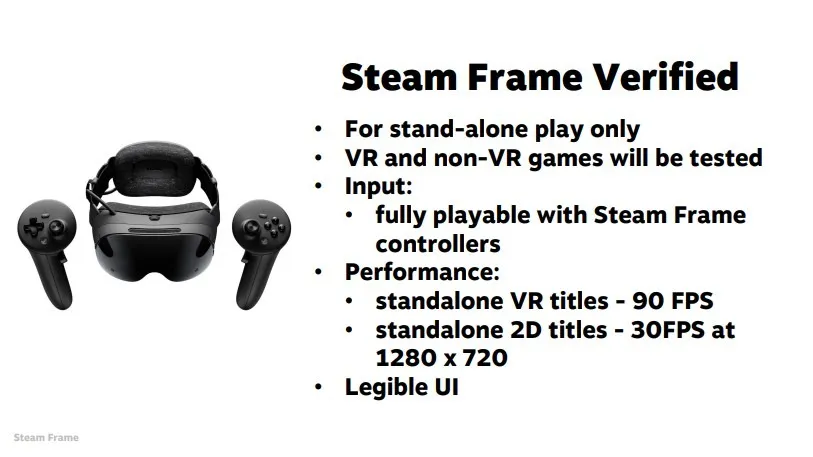
Moreover, Steam Frame is capable of downloading and playing non-VR titles, but the performance standards for these categories are more lenient, requiring only 30 fps at a resolution of 1280 x 720.
As a point of comparison, the Horizon Store stipulates that VR games must meet a minimum of 72 fps to align with its refresh rate, while other media formats can function at a minimum of 60 fps.
In addition, Valve emphasizes the need for a “legible user interface” and complete compatibility with Steam Frame controllers as integral aspects of meeting the verification standards.
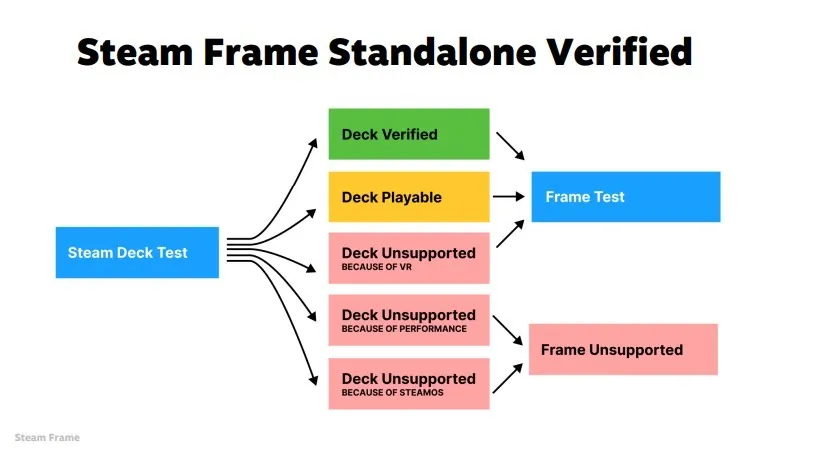
Games currently classified as ‘Verified’ or ‘Playable’ on the Steam Deck are pre-approved for the Frame Verified badge. Titles that lack support on the Deck due to performance issues or SteamOS compatibility will not qualify.
For those using PC VR setups, Valve assures that Frame’s direct WiFi 6 connectivity and Foveated Streaming protocol work seamlessly without necessitating further tests or verification procedures. “If it runs well on your host PC, it will run well on Steam Frame,” ensuring that streaming requires no special adaptation, even for VR games.
Thoughts on This Development
The increase from a minimum of 72 fps to 90 fps translates to a significant uplift of approximately 25% in rendering demands. Consequently, developers looking to transition their titles from Quest will need to invest time in optimization to achieve Steam Frame’s elevated performance metrics.
While there are similarities between Quest 3 and Steam Frame in specifications, they are not identical. Initially, it’s plausible that a greater number of non-VR titles will acquire the Frame Certified status than their VR counterparts, as developers might find the need to refine existing SteamVR games for standalone functionality.
Valve’s approach mirrors their practices with Steam Deck, allowing players to access their entire Steam library unhindered, with the new guidelines informing consumers about which games are fully functional.
However, Valve appears to be navigating challenges, with global shortages in RAM and storage affecting their timelines for launching Steam Frame, along with updates concerning Steam Machine and Steam Controller initiatives.
Stay Updated on Steam Frame Developments
Key Takeaways
- Valve’s performance criteria for the Steam Frame are significantly higher for VR games compared to non-VR titles.
- Developers may need to adapt existing games to meet the new benchmarks to secure the ‘Steam Frame Verified’ badge.
- The move from 72 fps to 90 fps represents a major increase in rendering demands for VR developers.
- Valve maintains its commitment to user accessibility by ensuring that any game playable on the PC can also run on the Steam Frame.
- Ongoing global supply issues could affect the release timeline for the Steam Frame and related products.
- Developers will soon have access to kits aimed at optimizing their titles for the new platform.