

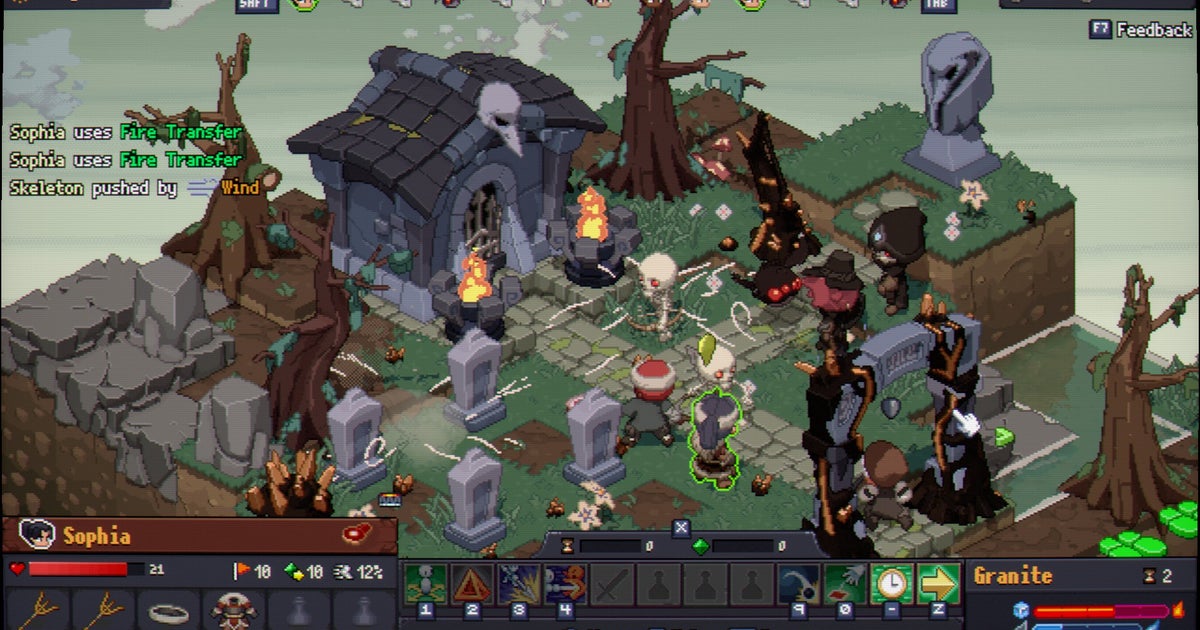
A new tactical role-playing game, *Never’s End*, is making waves in the gaming community, blending the iconic style of *Final Fantasy* with innovative strategies reminiscent of *Divinity: Original Sin*. Developed by a team that previously worked on *Destiny*, this game invites players to guide a band of possessed villagers as they confront an intriguing wave of undead foes. Visually, it presents an aesthetically muted palette filled with miniature characters traversing a dynamic grid-based battlefield. Yet, when you dig deeper into its mechanics, *Never’s End* offers unique combat experiences that evoke Larian Studios’ signature approach to spellcasting and environmental interactions.
What sets the magic system apart is its emphasis on thermodynamics rather than traditional elemental spells. Rather than simply summoning fire or ice monsters, players manipulate heat transfer to influence the battlefield. By selecting tiles within a defined range, players can transfer energy from one to another, altering temperatures strategically. For instance, heating a tile can eventually lead to igniting enemies standing in that area, while cooling can produce mist or snow, depending on the atmospheric conditions. The resulting gameplay is packed with layers of complexity that make each move feel consequential and impactful.
Watch on YouTube
In one encounter, I found myself battling a skeleton king and his entourage in a crypt. Unfortunately, I initially neglected to equip two of my four characters with weapons, leading to some frustrating moments as unarmed hits against armored foes significantly hurt my health. Despite this early blunder, I turned the tide using heat transfer to create an icy mist that decreased the accuracy of their ranged attackers. Moreover, this maneuver generated a strong wind that thwarted an advance by the undead, creating a chaotic yet strategic battlefield that tested both my tactical skills and my patience.
This unique blend of strategy means that, like in other spell-based games, fire can spread unpredictably. As my team faced the burning aftermath of one of my actions, I learned quickly the importance of environmental awareness. Despite some setbacks, the dynamic gameplay kept things engaging and unpredictable.
The possibilities for manipulating the environment extend far beyond simple tactics. Eventually, players will gain abilities to manage waterways or even transform terrain into molten lava, reminiscent of classic spell-casting adventures. While some might favor straightforward backstabbing strategies typically seen in conventional titles, I found joy in the unexpected chaos and variety that emerged from the game’s mechanics.
Exploring further similarities with Larian’s gameplay, you can actively push enemies into hazards, enhancing the tactical depth. Even fallen foes can be repurposed as projectiles, adding an element of dark humor to the otherwise grim scenario. The mechanics also emphasize the importance of positioning and timing, showcasing traditional RPG elements such as flanking and critical strikes.
Visually, the game presents its maps in a way that offers an intriguing preview of what lies ahead, reminiscent of the classic *Bastion*. Players can anticipate exploring diverse settings, from tropical jungles to desolate deserts, all while confronting various threats.
However, players will eventually delve into a broader narrative where building settlements against the undead threat will come into play. There’s a twist: the villagers you protect are also potential vessels for greater power, revealing darker themes at play. The notion that the protagonist might be the true villain adds compelling layers to the story, leaving players to ponder their choices as they embark on this tactical adventure.
For more insights, check out the demo available on Steam and explore this opening chapter of what could be a captivating gameplay experience.