



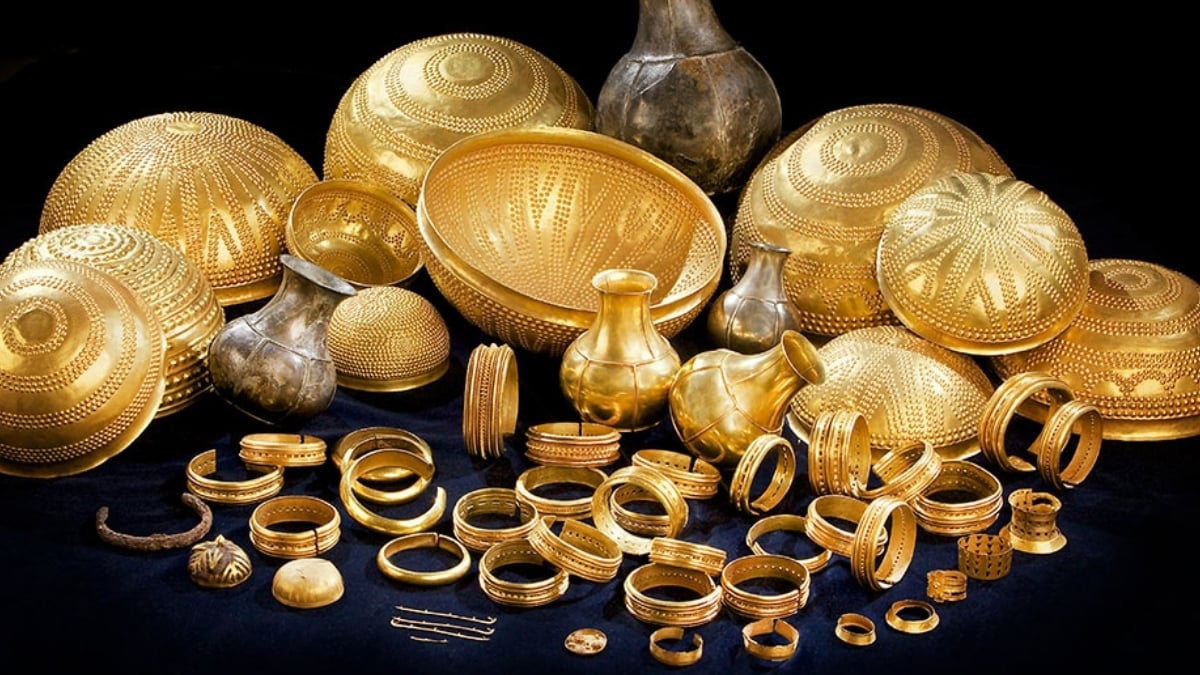
Buried within a remarkable haul of golden artifacts from the Iberian Bronze Age lies an intriguing discovery: two oxidized items that could redefine our understanding of ancient metallurgy.
Researchers have identified a simple, tarnished bracelet and a hollow, rusted hemisphere—both embellished with gold—crafted not from terrestrial metals, but from iron sourced from meteorites that descended to Earth.
This compelling finding indicates that the metalworking skills and methodologies practiced in Iberia over 3,000 years ago were more sophisticated than previously acknowledged.
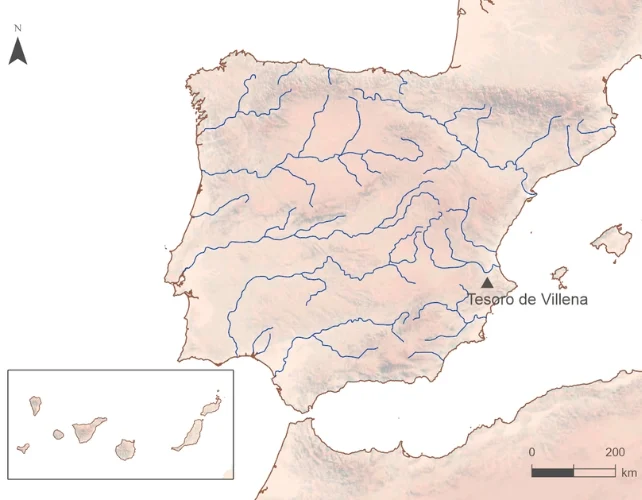
The Treasure of Villena, as this remarkable collection of 66 mainly gold items is known, was unearthed back in 1963 in the Alicante region of Spain. It has since been hailed as one of the finest examples of Bronze Age goldsmithing, both in the Iberian Peninsula and across Europe.
Determining the exact timeframe for these unique artifacts has proven challenging. The objects in question—a small hemisphere believed to be part of a ceremonial scepter or sword hilt, and an elongated bracelet resembling a traditional torc—exhibit what experts describe as a “ferrous” look, hinting at an iron composition.

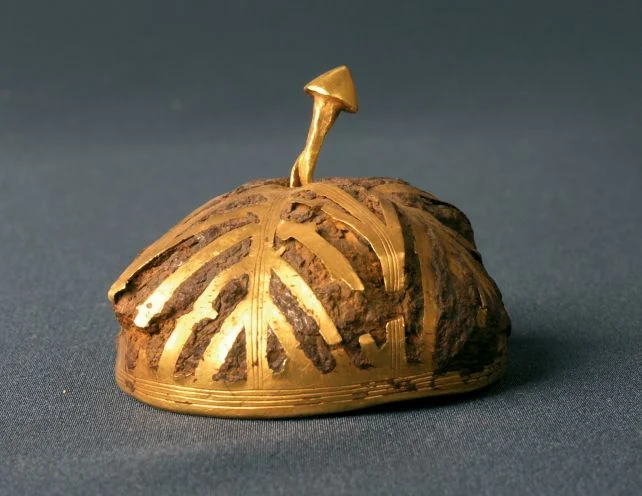
In the Iberian context, the Iron Age—characterized by the emergence of extracted iron over traditional bronze—did not commence until about 850 BCE, while the gold artifacts have been dated to between 1500 and 1200 BCE. This has led archaeologists to puzzle over how these ferrous items fit into the historical timeline of the Treasure of Villena.

Interestingly, iron from meteorites has been found in various ancient artifacts worldwide, predating the widespread use of terrestrial iron. Notably, meteoritic iron daggers and weapons exemplify its historical significance. Such items were highly esteemed in their time.
Researchers identified a key distinction: meteoritic iron contains significantly higher levels of nickel compared to iron extracted from the Earth. To clarify the origin of the artifacts from Villena, permission was sought from the Municipal Archaeological Museum of Villena to conduct analyses on the two pieces.
Using mass spectrometry, samples were obtained from both the hemisphere and the bracelet to scrutinize their metallic composition. Despite varying levels of corrosion that could affect the results, findings strongly indicate that both items were forged from meteoritic iron. This revelation positions them within the same time bracket as the rest of the collection, likely originating around 1400 to 1200 BCE.

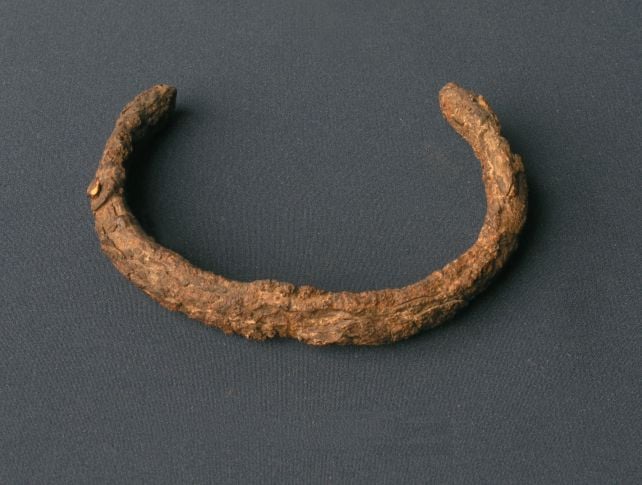
The evidence indicates that the hemisphere and bracelet from the Treasure of Villena are the earliest known artifacts made of meteoritic iron in the Iberian Peninsula, aligning with a Late Bronze Age timeline, prior to widespread production of iron from terrestrial sources.
While corrosion makes definitive conclusions difficult, advances in non-invasive techniques could provide additional insights to further substantiate this groundbreaking discovery.