

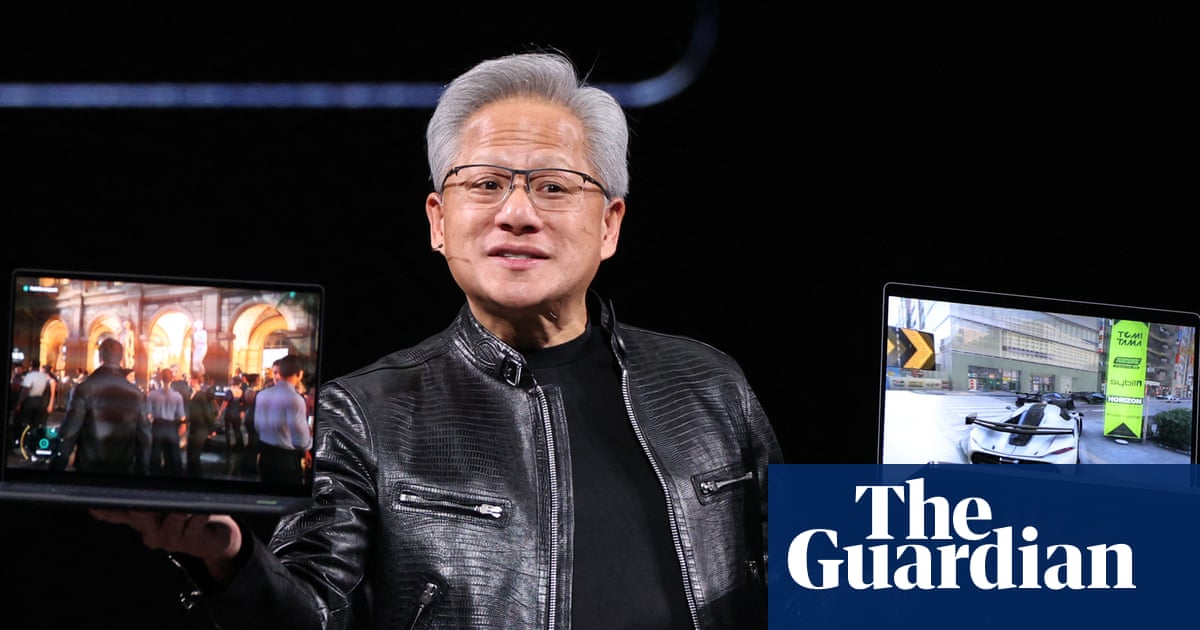
Nvidia has unveiled a cutting-edge “superchip” aimed at enhancing interactions with laptops and desktop computers. This advancement positions Nvidia to challenge industry giants and promises to reshape personal computing.
The RTX Spark chip, expected to launch later this year, will be integrated into devices from major manufacturers running on Microsoft’s Windows operating system.
At the Computex conference in Taiwan, the CEO described this innovative chip as potentially “reinventing the PC” for a new era driven by AI technology, marking the culmination of a three-year collaboration between Nvidia and Microsoft.
This chip combines a microprocessor and a graphics chip and is engineered to operate AI agents locally, reducing reliance on traditional input methods like mouse and keyboard while maintaining the slim and lightweight design of computers.
This shift represents the first major rethinking of personal computers in over four decades, indicating Nvidia’s aspiration to redefine PCs.
Nvidia’s venture into the consumer market signifies an expansion from its traditional dominance in the AI semiconductor sector, focusing on integrated chips that could power entire computers.
Experts compare the RTX Spark launch to groundbreaking introductions of transformative technologies, envisioning it reshaping conventional personal computers into intelligent digital companions.
Nvidia also introduced the Vera central processing unit (CPU) designed for AI agents and early adopters. This move broadens Nvidia’s influence from data centers into everyday technology.
While the advancement is strategically important, many may view it as a long-term growth opportunity rather than an immediate profit boost, as Nvidia’s financial performance still relies on strong global demand for AI infrastructure.
In response to growing AI chip competition, Intel plans to launch an AI chip that utilizes more cost-effective memory and cooling solutions, enhancing the competitive landscape.
Addressing concerns about AI’s impact on jobs, Nvidia rejects the notion that technology will diminish demand for software engineers, asserting that it empowers workers and creates greater hiring opportunities.