

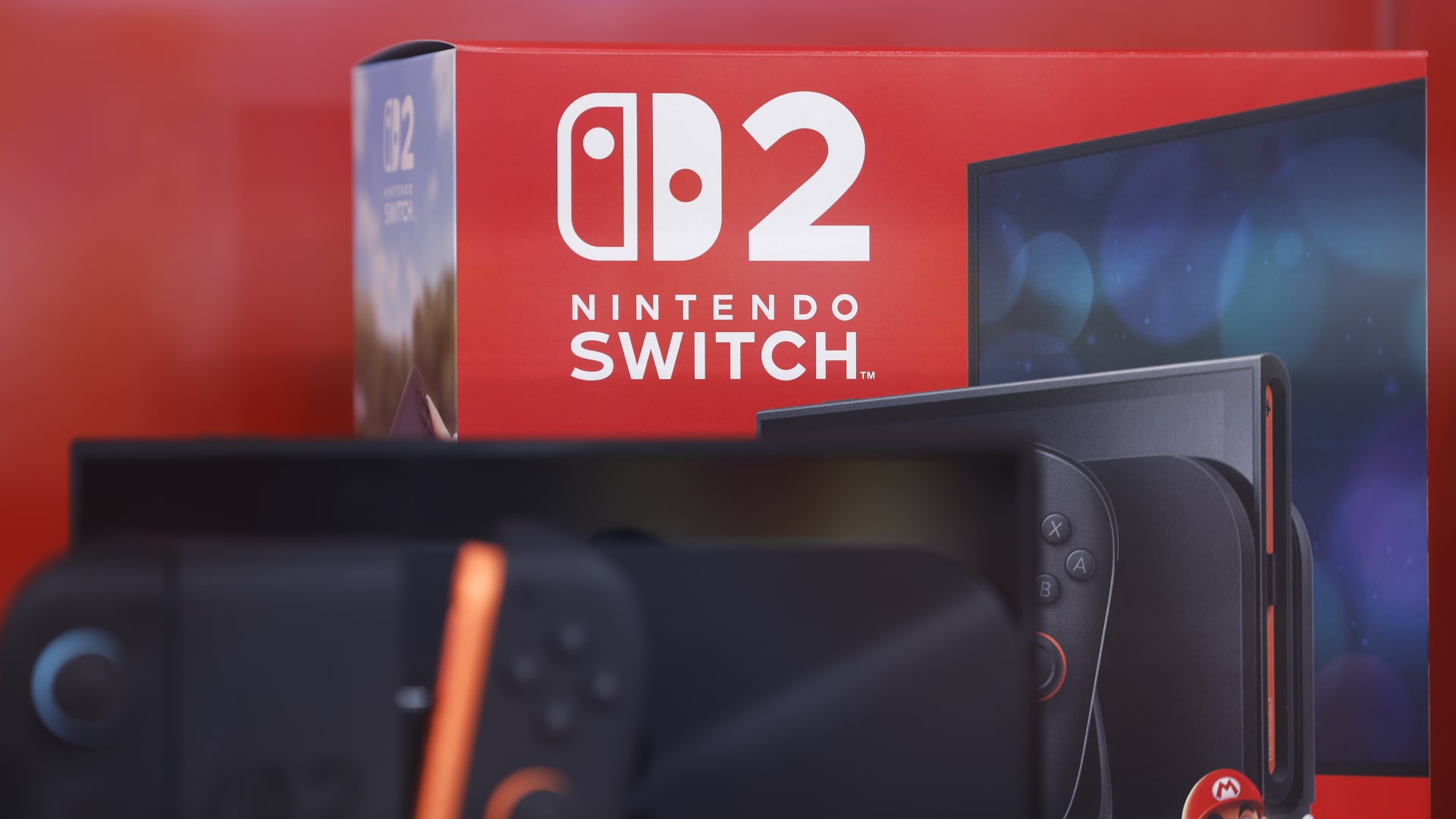
Nintendo Shares Decline Amid Memory Chip Shortage Concerns
Nintendo’s stock took a considerable hit on Wednesday, sinking over 10% after falling short of revenue expectations for its latest quarterly report. This decline comes in the wake of troubling news regarding a severe shortage of crucial memory components that are integral to its gaming consoles.
Despite these challenges, Nintendo reported a 24% year-over-year increase in profits, driven largely by the continued strong sales of its Nintendo Switch console, which has become the company’s most successful model since its launch in 2017. The company recorded an impressive revenue surge of 86%.
However, the ongoing memory chip crisis—specifically the shortage of dynamic random access memory (DRAM)—remains a significant area of concern for both the company and its investors. The rising prices of these essential components are feared to impact Nintendo’s profit margins moving forward.
Nintendo’s President reassured that current memory price hikes are manageable this financial year, but acknowledged potential longer-term risks if the trend does not reverse. The severe demand for DRAM, driven by advancements in artificial intelligence and data centers, has caused contract prices to rise dramatically. A recent report indicated that prices for these chips could increase by as much as 95% in the first quarter of this year.
Adding to the complexity of the situation, a leading semiconductor executive recently warned that the memory chip shortage could extend through 2027, leading industry watchers to speculate that Nintendo might have no choice but to raise prices on its consoles.
The launch of Nintendo’s latest console, the Switch 2, already represented a significant investment for consumers, and a price hike could alienate its more casual gaming audience. Released in June of last year, the Switch 2 currently accounts for a major portion of Nintendo’s sales.
In addition to these obstacles, there are growing worries about the momentum of the Switch 2 itself. Analysts suggest that the first year post-launch is critical for a console’s success, and Nintendo’s previous console, the original Switch, set a high bar with phenomenal sales during its first year that are proving difficult to replicate.
The company’s future success now hinges on upcoming game releases for the Switch 2 and whether they can incentivize players to adopt the new console. Titles like “Mario Tennis Fever,” scheduled for February, and “Pokémon Pokopia,” set for March, are part of Nintendo’s strategy, alongside the highly anticipated “Super Mario Galaxy Movie,” which is set to launch in April.
Looking ahead, industry experts believe that 2026 will be a pivotal year for the Switch 2 as Nintendo aims to expand its appeal to a broader audience.
So far in 2023, Nintendo’s shares have dropped more than 15%.
Key Takeaways
- Revenue vs. Profit: Despite not meeting revenue estimates, Nintendo saw a solid profit increase, driven by strong demand for the Switch.
- Memory Supply Challenges: The company faces significant supply issues with DRAM, impacting production costs.
- Investor Sentiment: Concerns about profit margins due to rising memory prices are creating apprehension among investors.
- Launch Impact: The importance of a strong launch year for gaming consoles remains a key consideration for Nintendo.
- Upcoming Releases: Several high-profile game launches are on the horizon, which may boost the Switch 2’s performance.
- Market Predictions: The trajectory of Nintendo’s performance hinges on its ability to adapt amidst ongoing shortages and changing consumer expectations.