

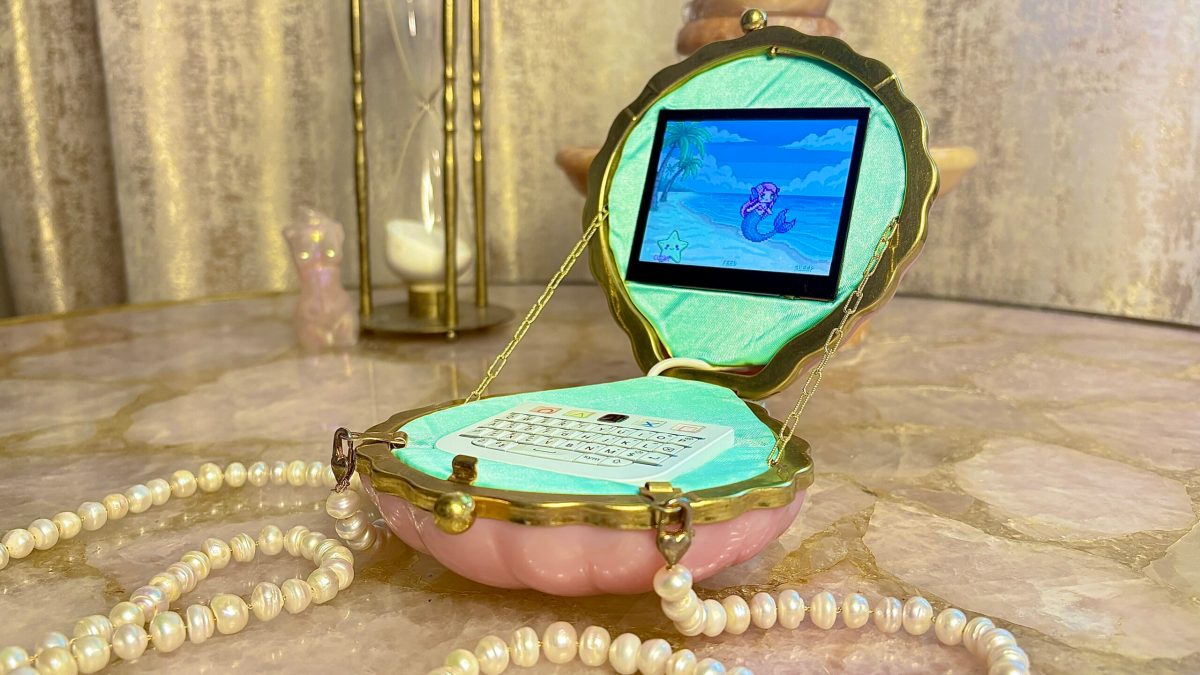
In a delightful twist on tech trends, cyberdecks are capturing public imagination, merging creativity and functionality in the process.
“It sparks so much joy for me,” one advocate shares about her seashell cyberdeck. “It functions like a Tamagotchi and an e-reader. It’s linked to my servers and stores all my data — PDFs, notes, you name it. Plus, it’s integrated with my AI setup at home.”
The concept of the cyberdeck first appeared in William Gibson’s 1984 science fiction classic “Neuromancer.” As compact computers like the Raspberry Pi became available in the 2010s, DIY enthusiasts rallied around the idea. Recently, niche communities have gained momentum, particularly among women on social media, who are sharing their colorful, artistic takes on building cyberdecks.
“It’s a funny little joke that tech often leans towards the bland — the pro models are usually black or gray,” one advocate quips. “Why can’t we have vibrant colors like pink?”
Crafting a cyberdeck has turned into a form of artistic expression. On platforms like Instagram and TikTok, examples abound—from a wood-and-moss gaming deck that plays retro games to a fossil-inspired MP3 player fashioned through 3D printing, and even a Barbie dollhouse concealing a fully functional mini-computer.
“Instead of Meta glasses, I want a cheeky little seashell computer,” said one creator. “These are pieces of equipment no one can surveil. You can get parts from thrift shops or eBay and give them a personal touch.”
While aesthetics are certainly a part of this rising trend—why not use a whimsical purse to access your email?—the creators emphasize that their work is about more than just sparkles. Personalized devices offer a sense of empowerment amidst the uniformity of major tech corporations.
“For those disillusioned by conventional tech, such devices are genuinely liberating,” one advocate notes, drawing attention to the frustration with products locked down by manufacturers. “People are taking things back into their own hands, and often that’s a pathway to creativity.”
One creator, while primarily working as a blockchain developer, finds joy in repurposing outdated computer components.
“I started creating jewelry and art items from old tech a few months ago,” she states. “When I stumbled upon cyberdecks, I thought, why not make something wearable and portable with these pieces?”
Her cyberdecks showcase a unique merger of fiber art and technology. She refers to her works as “crocheting with computers,” drawing a parallel between weaving and early computing—a craft often relegated to women throughout history.
Historically, some of the first computers utilized magnetic-core memory, using precision-woven wiring to represent binary code. For NASA’s Apollo Guidance Computer, skilled women textile workers meticulously crafted wires to facilitate the moon landing.
“The pioneering chip was systematically woven by seamstresses, not engineers,” she reflects. “This full-circle moment illustrates the strong ties between craftsmanship and technology.”
She has now taken to integrating pink Raspberry Pis into her wearable creations, sharing her progress pictures online.
“Once the macrame gained traction, I received some dismissive comments from men,” she describes. “But when they realized the Raspberry Pi was safely encased, they seemed more okay with it.”
From whimsical designs to wearable tech, these cyberdecks challenge Silicon Valley norms. They intentionally embrace impracticality as a statement against a culture obsessed with efficiency—a refreshing act in an age where superficial tech advancements often prevail.
“Previously, entering a tech conference meant dealing with a sea of men and being mistaken for marketing staff,” she reflects. “Now, it’s thrilling to connect with other women embracing hardware, sharing knowledge—this inclusive energy is desperately needed all around.”