



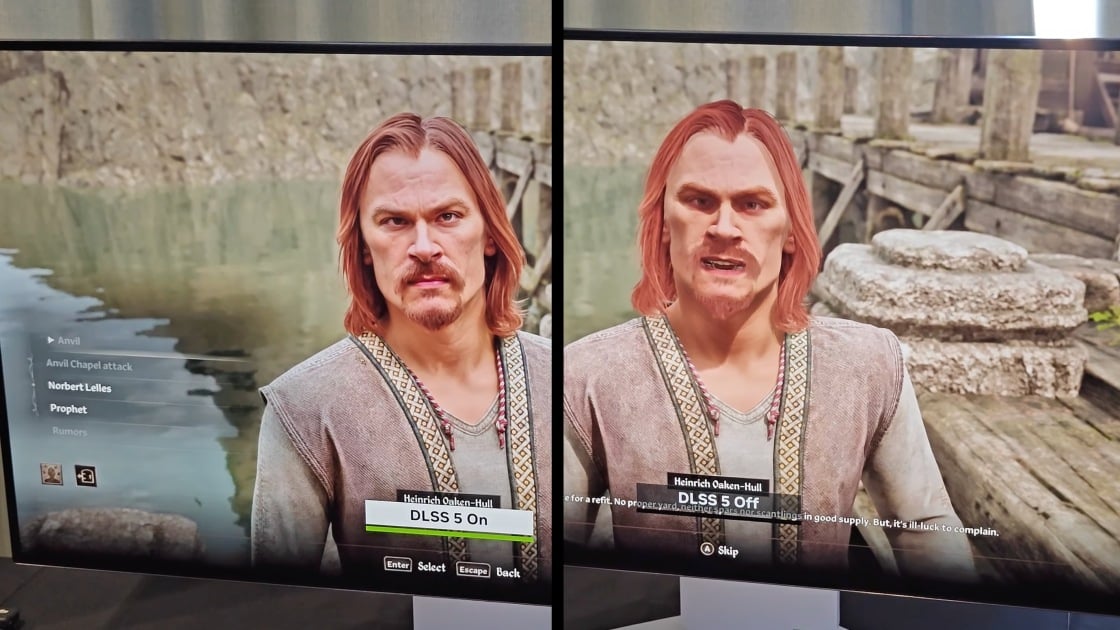
As technology evolves, so do the expectations of gamers seeking immersive experiences. Nvidia’s latest innovation, DLSS 5, aims to redefine what graphics can achieve in gaming. This development stirs excitement and skepticism as gamers grapple with its implications.
During Nvidia’s recent presentation, a series of short demos featuring DLSS 5 showcased its potential impact on gaming visuals.
DLSS 5: Innovation and Concerns
DLSS has gained recognition for employing AI-driven techniques to enhance frame rates and image quality. The newly unveiled DLSS 5 adds a “neural rendering” layer, incorporating photorealistic effects that elevate the visual experience.
Nvidia has been meticulously crafting this technology for three years, striving for lifelike game environments and characters.
Critics express apprehension that DLSS 5 may oversimplify graphics enhancements, likening it to mere aesthetic filters that could dilute artistic integrity in games. Concerns about the potential “AI slop” effect could compromise the artistry of developer-designed characters.
Such issues weighed on my mind during the demos, yet the potential for DLSS 5 to raise the bar for computer graphics was evident.
Hands-On Experience with DLSS 5
It was clear that DLSS 5 was more than just a basic filter. Natural elements within games took on a striking realism that traditional rendering methods often struggle to achieve. Even fantastical settings were transformed into visually stunning experiences.
In a demonstration of a classic game, characters originally designed decades ago became noticeably more realistic, shedding dated features for richly detailed appearances that enhanced player immersion.
Equally impressive was how DLSS 5 portrayed landscapes in recent titles. The lush environments seemed organic, with textures and lighting closely mimicking real-world photography rather than stylized gaming graphics.
Enhancements felt organic rather than forced, as DLSS 5’s neural rendering aimed to respect and enrich existing 3D models while maintaining their original integrity.
The Tech Requirements for DLSS 5
Despite its impressive capabilities, DLSS 5 remains far from fully realized. Nvidia demonstrated the technology using top-tier graphics cards. Questions arise regarding whether DLSS 5 might negatively impact performance—ironic since DLSS was designed to optimize frame rates on lower-spec hardware. My limited playtest merely scratched the surface; I navigated static environments without engaging in high-action sequences.
As costs in the PC market rise, skepticism is understandable. Many gamers are torn between cautious excitement and concern over what these advancements could mean for their gaming experiences.
Nonetheless, the genuinely realistic graphics that DLSS 5 promises leads to eager anticipation for its full release. This is a breakthrough that, once experienced, is difficult to dismiss.
Nvidia has clarified that game developers will retain full control over the application of DLSS 5 in their creations, ensuring that established developers are preparing to harness this new technology.
Key Takeaways
- Nvidia’s DLSS 5 seeks to elevate gaming graphics through advanced neural rendering while fostering debate among gamers and developers alike.
- Critics express valid concerns about the potential dilution of artistic integrity in gaming, raising questions about AI’s role in creativity.
- The technology requires high-end hardware, making accessibility an issue as Nvidia works towards broader optimization.
- Initial hands-on experiences reveal a promising ability to render environments and characters with unprecedented realism.
- Developers retain control over how DLSS 5 is integrated, allowing personalized applications of the technology in future titles.