

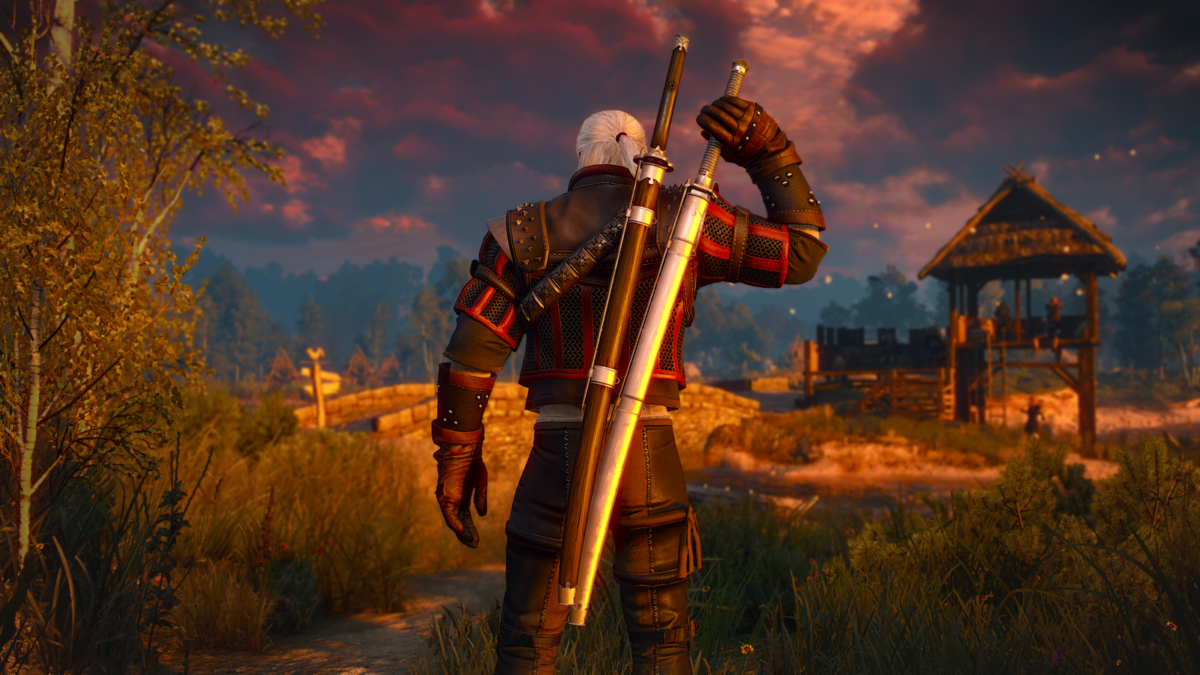
The Witcher 3 originally debuted in 2015, marking its place as a beloved RPG title among fans. Since then, the gaming landscape has dramatically transformed. CD Projekt Red, the Polish developer behind the franchise, has experienced fluctuating public perception, especially after the release of Cyberpunk 2077. The game, alongside the card game Gwent, helped reshape the studio’s image. Additionally, thanks to Netflix, the franchise has become an internet sensation. Yet, there’s a more profound shift occurring as CD Projekt Red prepares for the release of the Songs of the Past expansion.
Before the launch of The Witcher 3, CD Projekt was primarily known for its GOG platform. In a 2014 report, the studio disclosed that most of its income stemmed from GOG, contributing to the estimated $81 million budget for The Witcher 3. By comparison, the production values of major titles like 2020’s Ghost of Tsushima were significantly lower, estimated at around $60 million. This financial backbone allowed The Witcher 3 to take bold creative risks, although it also faced controversy regarding intense development periods. The studio’s modest beginnings enabled it to prioritize community relations through numerous free updates for the game.
Fast forward to today, and CD Projekt no longer owns GOG, but its transformation into a heavyweight in the gaming industry is evident. While it may not rival the scale of larger studios, its growth has brought it closer to major players. As of early 2023, the team expanded to nearly 933 employees. Over the past decade, CD Projekt has diversified its portfolio through acquisitions, including studios dedicated to future Cyberpunk projects and mobile gaming ventures.
Despite the expansion, not all 933 employees are focused on Songs of the Past. The development partnership with Fool’s Theory, a smaller studio comprised of veterans from The Witcher 3, indicates a collaborative approach. As of January 2026, around 100 former CD Projekt developers still remain involved, although not all pivotal figures are with the company anymore.
The upcoming expansion, while less significant than a major release, offers an opportunity for newer team members to connect with the rich lore of the franchise. It may also pave the way for experimental designs. Many businesses in gaming have illustrated that financial backing can empower mid-size companies to fulfill their creative visions. CD Projekt Red stands at a critical junction, where the output of Songs of the Past could dictate the studio’s direction in the future.
Key Takeaways
- The Witcher 3 has retained its popularity, even as the gaming industry evolves.
- CD Projekt Red has significantly expanded its workforce since the initial release.
- The collaboration with Fool’s Theory suggests a blend of new ideas and experienced input.
- The upcoming expansion may serve as a testing ground for fresh creative concepts.
- The trajectory of CD Projekt Red reflects a broader trend in the gaming industry where financial success impacts creative expression.
- As the studio faces new challenges, the reception of Songs of the Past could influence future projects and direction.