

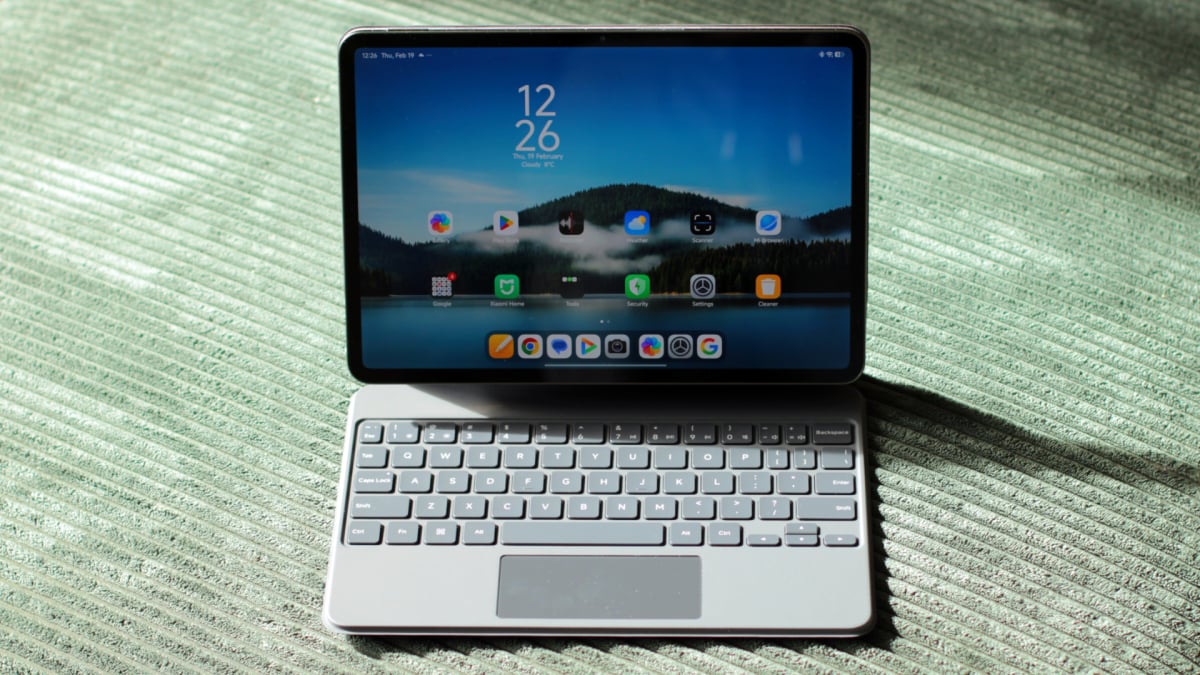
Xiaomi has adopted a straightforward approach in the realm of smartphones, tablets, and accessories, mirroring Apple’s successful concepts while integrating the strengths of the Android universe. Their latest offering, the Xiaomi Pad 8 Pro, unveiled at the recent Mobile World Congress in Barcelona, exemplifies this philosophy. This robust 11.2-inch tablet features sleek black bezels and a sturdy metallic body, accompanied by accessories that can transform it into a portable workstation, including a stylus and various keyboard options.

At its core, the device is powered by the Snapdragon 8 Elite chip and boasts a substantial 9,200mAh battery. With options that include 8 or 12GB of RAM and varying storage capacities (128GB, 256GB, or 512GB), it also features quad speakers equipped to deliver Hi-Res audio and Dolby Atmos sound quality. The 50-megapixel main camera and a 32-megapixel front camera may seem excessive for a tablet, yet they are a welcome addition.
In terms of size, the Xiaomi Pad 8 Pro closely resembles the iPad Pro, with its measurements nearly mirroring that of its Apple counterpart (Xiaomi’s at 5.75mm and 485 grams compared to iPad’s 5.3mm and 444 grams). The Magic Keyboard Pro Focus appears strikingly similar to Apple’s Magic Keyboard, and Xiaomi also offers a lighter alternative, the Xiaomi Magic Keyboard Pro. Even the Xiaomi Focus Pen Pro closely resembles the Apple Pencil.

The quality of Xiaomi’s tablet and accessories is commendable. While they bear a resemblance to Apple’s designs, they demonstrate a level of craftsmanship that suggests they are not mere imitations. Indeed, they offer notable advantages over competing devices, particularly in camera performance and fast 67W charging. The 3.2K display provides crisp visuals, and the battery life is impressive for tasks like browsing, reading, and even acting as a secondary display—compatible with Macs. Although the Xiaomi Pad 8 Pro may not match the power of the iPad Pro, most users may not require that level of performance. In everyday tasks, it proves to be quite responsive.
However, Xiaomi’s HyperOS software could benefit from refinement. It closely resembles Apple’s iPadOS, including the design of its icons, but sometimes feels like a smartphone OS in tablet form. Users may find it frustrating that widgets take up excessive screen space, making adjustments cumbersome. Additionally, Google Gemini serves as an AI assistant, accessible with a long press of the power button.

The choice of keyboards affects the overall bulk of the device. Opting for the more substantial Magic Keyboard Pro Focus makes the tablet feel more like a compact laptop, whereas choosing the lighter model promotes a more portable experience. While the Xiaomi Pad 8 Pro isn’t designed as a full laptop replacement, neither is the iPad. Instead, it stands out as a versatile Android tablet, ideal for activities like browsing, reading, gaming, and light productivity tasks.
Key Takeaways
- The build quality is commendable, providing a robust feel that rivals many established competitors.
- The versatility of accessories opens possibilities for users seeking a hybrid experience.
- Camera capabilities exceed those typically expected from a tablet.
- The battery life is favorable for casual use, making it suitable for a range of activities.
- There may be areas for improvement in the software interface to cater better to tablet users.
- This device reinforces that Android can deliver a rich, versatile tablet experience without solely relying on Apple’s design framework.