

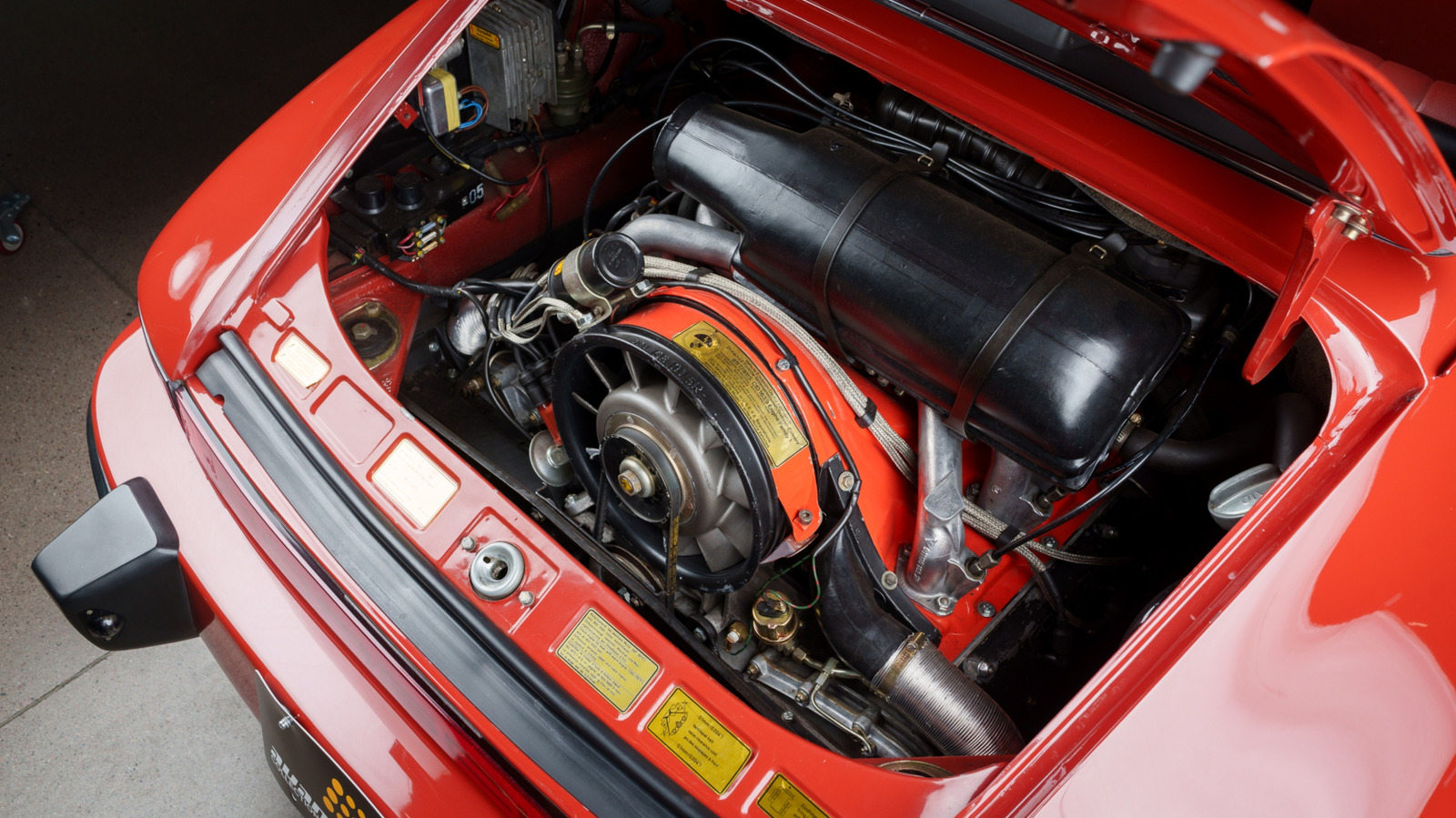
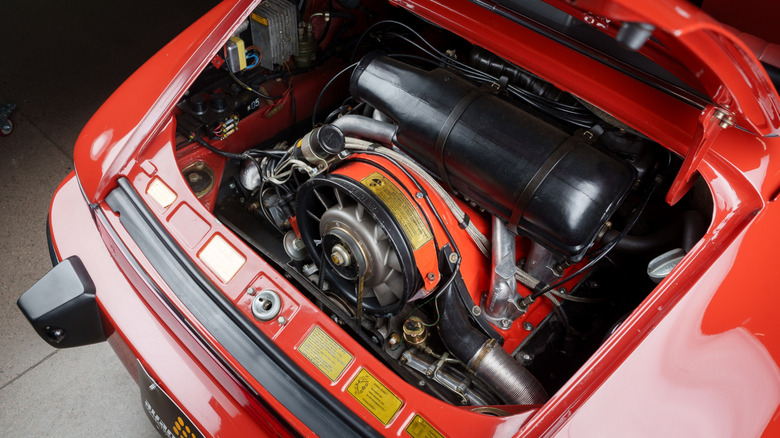
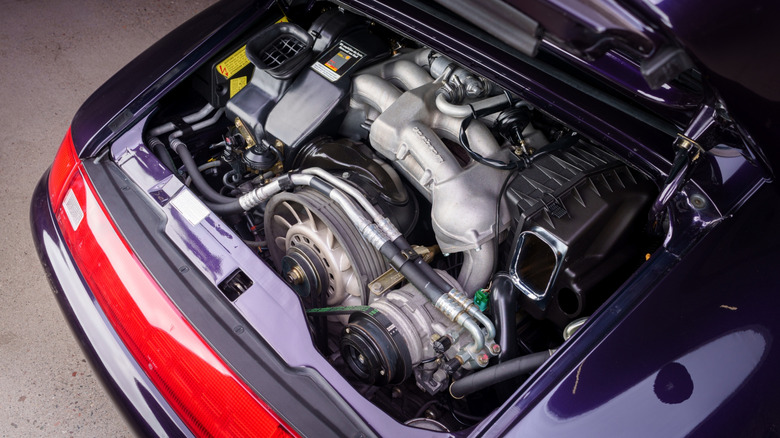
Among enthusiasts, the legendary 993 series (built from 1994 to 1998) marks the final chapter of the air-cooled Porsche 911 saga. These classic models ingeniously combine air and oil to maintain optimal engine temperatures for their iconic flat-6 engines. This contrasts with modern liquid-cooled systems, which depend on radiators and pumps to regulate heat effectively.
At a classic 911’s rear, a sizeable cooling fan is positioned directly over the engine. The flat-6’s design features fins that enhance surface area for efficient heat dissipation. The fan circulates cool air around the flat-6 and its components, ensuring a stable engine temperature.
Additionally, an oil cooler sits within the engine compartment, functioning similarly to a passive heat exchanger. This system circulates lubricating oil back into the engine, with pathways for both hot and cold oil. Interestingly, not every air-cooled 911 model included an engine-mounted oil cooler from the factory. Porsche chose front-mounted oil coolers with dedicated fans for the 964 (1989-1994) and 993 generations, first introduced in the late G-series cars (1987-1989).
A Look at the Oil Cooler Variants in Air-Cooled 911s
Porsche first implemented front, fender-mounted oil coolers in the 1969 911S model. Initially an optional upgrade, these became standard starting with the SC model in 1978. Earlier cars (1965-1973) mainly operated without them, while later models introduced a loop cooler design for 1973 to 1983 models. By 1984, the U.S.-spec Carrera featured an upgraded 28-tube brass-type cooler. Between 1987 and 1989, models transitioned from passive to active cooling systems, incorporating an aluminum oil cooler paired with an electric fan.
The rationale is straightforward. The main cooling fan is driven by the crankshaft, making its operation dependent on engine RPM. As 911 models evolved and power output increased, the need for enhanced cooling capabilities became apparent. To maintain temperature when stationary, Porsche introduced fans for their oil coolers.
However, air-cooled engines faced inherent challenges. Slow warming could lead to poor combustion and emissions standards issues, prompting Porsche to move away from air-cooled systems altogether. As performance demands grew, the limitations of this design became pronounced, leading to its eventual decline.
Despite the simplicity of air cooling, it has drawbacks. Water conducts heat significantly more efficiently than air, which explains the rarity of air-cooled engines in today’s automotive landscape, including in Porsche’s current lineup.