

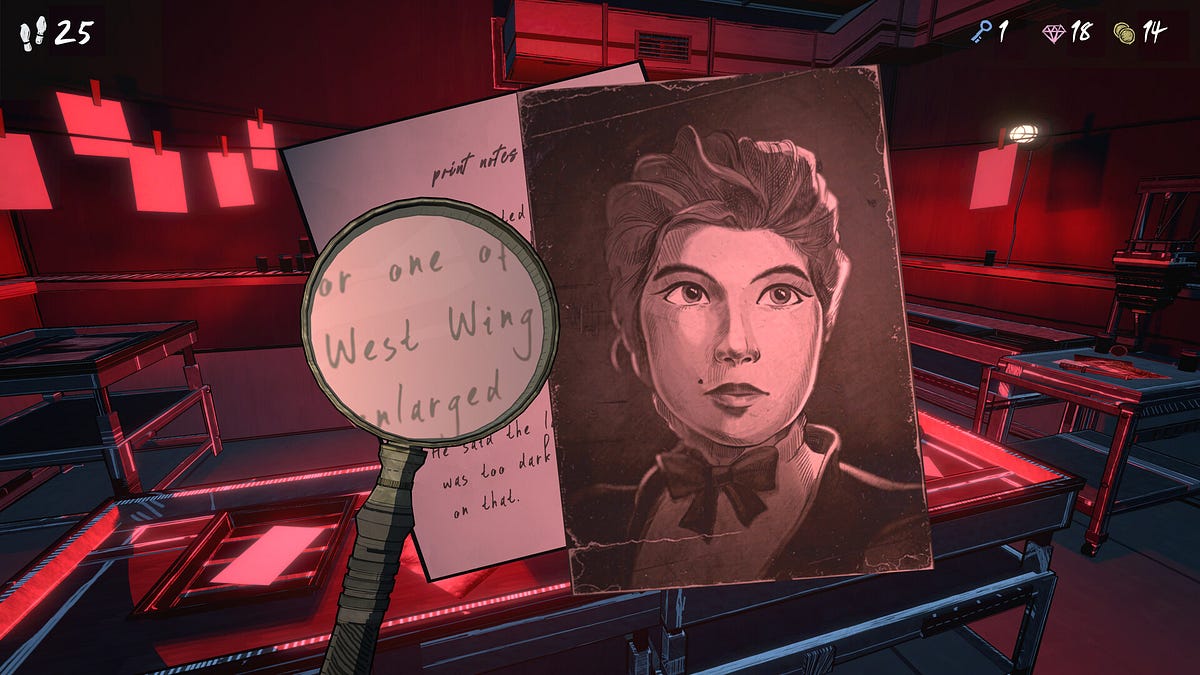
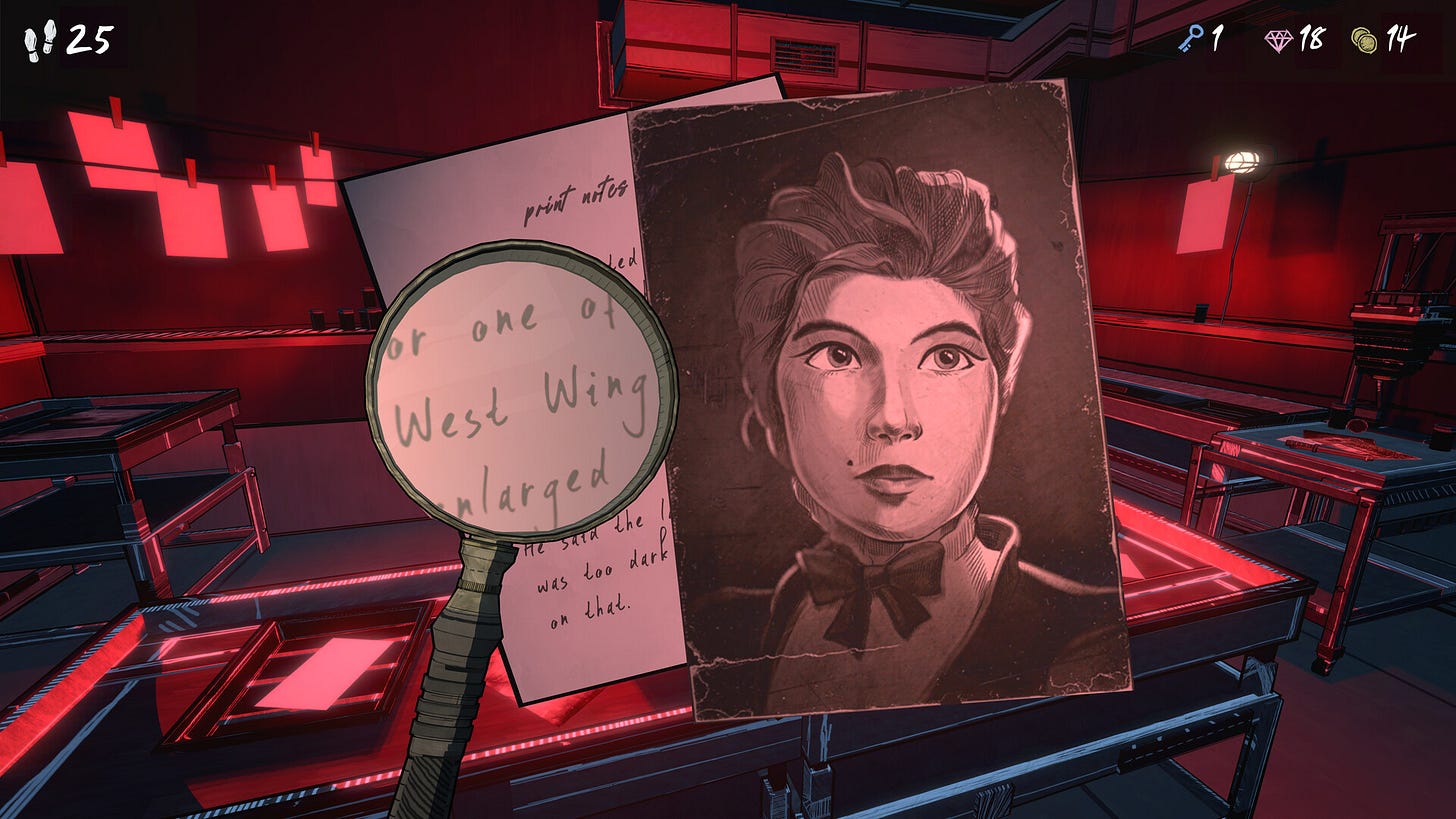
Last week at the Game Developers Conference (GDC), I had the opportunity to catch up with Tonda Ros, the lead designer behind the eagerly anticipated puzzle game, Blue Prince, slated for release in 2025. Intrigued, I aimed to ask him about two distinct puzzles: the standout feature of the game and the least favorite.
My first inquiry was: Which puzzle do you consider the strongest in your game?
My second was: Conversely, which one do you deem the weakest?
Ros shared insights that, while avoiding key plot details, provide a glimpse into his creative process.
For those unfamiliar with Blue Prince, the game immerses players in a first-person world replete with intricate puzzles. Players inherit a mansion from their uncle and navigate through an array of rooms, redefining the mansion’s layout with each in-game day. Inside, players encounter multiple puzzles, some of which challenge the mind more than others. Having invested over 100 hours in Blue Prince last year, I found it to be a captivating experience.
Ros immediately identified his favorite puzzle: “It involves 44 letters, but that’s as much as I’m willing to share,” he said.
Instinctively, I recognized the puzzle he meant—it was the one that had initially captivated my attention when I first began playing. Although I wasn’t initially aware of its complexity regarding 44 letters, discovering it was part of the experience that drew me in.
So, why does he hold this puzzle in such high regard?
“I haven’t seen anything like it in other games, making it stand out for me,” Ros remarked. Many of the other puzzles, he noted, are variations of concepts already familiar to players.
That perspective aligns with what one could expect from a proud puzzle designer.
As for the least favorite puzzle, Ros indicated it originates from the parlor room.
Every time players visit this virtual room, they will encounter three small boxes—Blue, White, and Black—each adorned with riddles. The rules governing this parlor game are:
- One box contains valuable gems.
- One box’s statement is undoubtedly truthful.
- One box’s statement is definitively false.
Blue Prince features numerous adaptations of this three-box parlor puzzle. According to Ros, one of them could very well be the weakest in the game’s collection.
In an impromptu moment during the GDC, he recalled a parlor puzzle he considered so poor that he’d initiated a patch for it.
However, upon further reflection this week, he recognized he had misremembered: he hadn’t removed the puzzle altogether, but rather wants to tweak it, and he might still do that!
While he acknowledged delving deep into the details, he embraced that complexity. After all, detailed exploration is a hallmark of meaningful game design.
To illustrate a parlor puzzle he enjoys, Ros described one strong example that, despite being challenging, still maintains clarity.
This is a puzzle he did not select, but it serves to demonstrate how these parlor puzzles function.
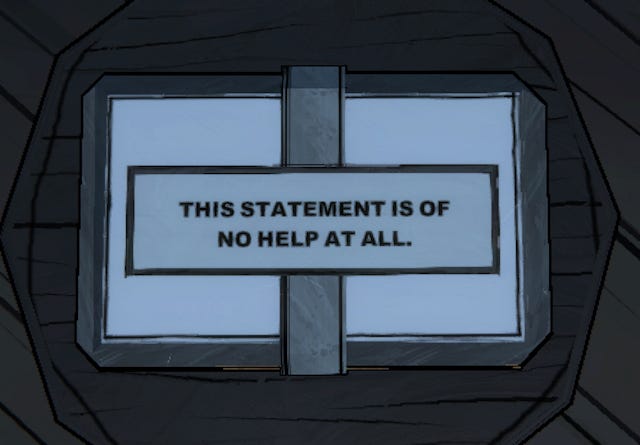
The clues for this favorable puzzle are:
-
Blue: “The gems are in this box”
-
White: “This statement is no help at all”
-
Black: “The gems are in the blue box”
Ros described this as “a puzzle I hold dear despite its mathematical flaws.” Notably, the White box makes an intriguing declaration about being unhelpful, creating a playful engaging experience.
In contrast, we arrive at the puzzle he regards as less favorable.
“Regrettably,” he shared, “a second unintentional ambiguous parlor puzzle made it into the game during our extensive logic testing.”
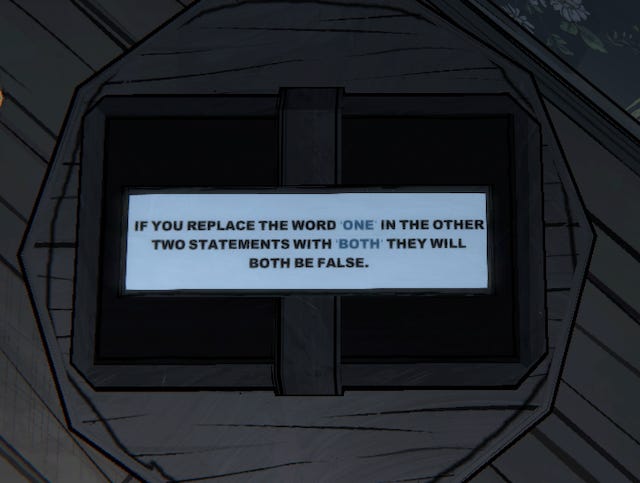
Here is the troublesome puzzle:
-
Blue: “One of the other statements is false”
-
White: “One of the other boxes contains gems”
-
Black: “If you replace the word ONE in the other two statements with BOTH, they will both be false”
As I attempted to unravel this challenge, I quickly realized that guessing would have been my only option if I encountered this puzzle in the game.
Ros shared his thoughts: “This rather jumbled parlor puzzle might be my least favorite in the game. Before the final patch, I would love to revisit this and refine the wording to enhance its clarity.”
While Ros takes pride in introducing a unique 44-letter puzzle, he expressed disappointment in presenting players with a puzzling enigma that lacks elegance.
Fortunately, Blue Prince is filled with a myriad of well-crafted puzzles to discover.
Key Takeaways
1. **Innovative Design:** Emphasizes the importance of creativity in puzzle design, showcasing how unique elements can set a game apart.
2. **Ambiguity in Puzzles:** The balance between challenge and clarity is crucial, as seen in both the highlighted favorite and least favorite puzzles.
3. **Player Experience Matters:** Engaging players through intricate design can lead to memorable gaming moments, creating a lasting impact.
4. **Ongoing Development:** Feedback and iterative design allow developers to refine puzzles post-launch, ensuring a better player experience over time.
5. **Puzzle as Gameplay:** Understanding how puzzles integrate into the overall gameplay helps players appreciate the narrative and design behind the game.