

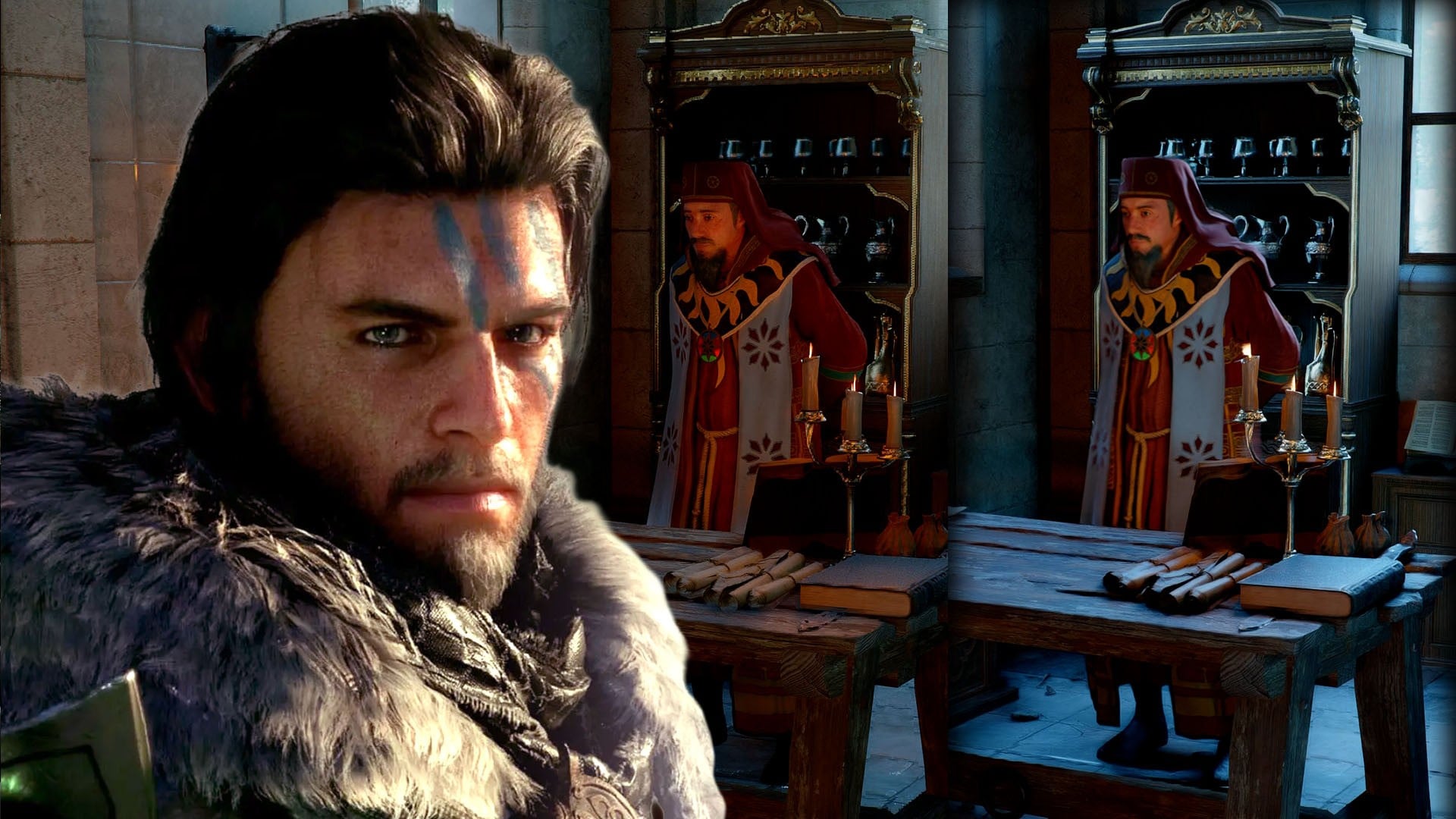
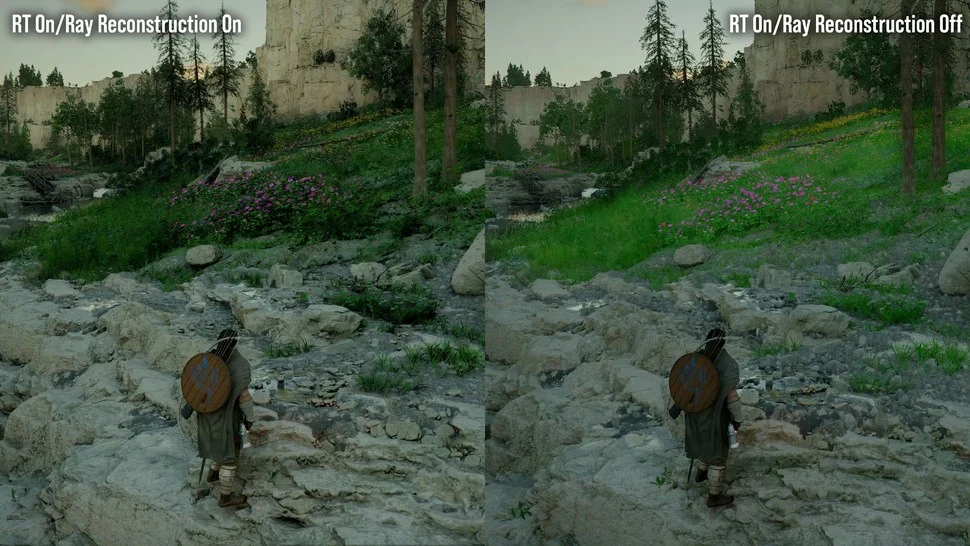
In exploring the rich visual landscape of *Crimson Desert* on PC, a game-changing aspect elevates the graphic experience. While earlier coverage praised the game’s graphics on platforms like PlayStation 5, the standout feature for PC gamers stems from sophisticated machine learning technology. Although ray tracing has set a high bar, the use of AMD’s ray regeneration and Nvidia’s ray reconstruction significantly upgrades the visual quality.
In *Crimson Desert*, ray tracing plays a pivotal role through indirect lighting across various console versions. Achieving this level of graphical fidelity, however, comes with compromises affecting performance and visual integrity.
The game employs a unique surfel-based technique for ray-traced global illumination (RTGI), utilizing only one-sixteenth of the traditional rays per pixel. This innovative approach allows for effective performance across a wide range of devices, potentially at the cost of visual detail.
Enter the denoising technology from Nvidia and AMD, which significantly upgrades the lighting quality. These advanced techniques resemble a complete overhaul rather than a minor enhancement. Standard denoisers can leave scenes flat and uninviting, robbing shadows and depth from decorative elements.
Thanks to AMD’s FSR Redstone ray regeneration and Nvidia’s DLSS ray reconstruction, lighting details have improved significantly. Shadows now appear under structures, enhancing the sense of place. Additionally, revamped lighting elevates local reflections, rooting objects within their surroundings.
The improvements extend beyond static visuals; these machine learning-driven denoisers tackle issues with dynamic reflections on moving surfaces. Traditional denoising methods can make water’s reflections appear jittery, while ML denoising offers a sharper, more stable visual narrative. Players can expect enriched feedback from light sources, further enhancing the immersive experience.
However, elevating the denoising process can lead to a drop in frame rates. For instance, enabling ray reconstruction on an RTX 5080 in performance mode results in a 14% decrease in output. AMD’s RX 9070 XT shows a 24% performance hit with FSR 4 upscaling. Balancing quality settings with performance objectives is essential for an optimal gaming experience.
While both tech solutions are impressive, they have flaws. AMD’s ray regeneration often fails to integrate properly, affecting visual quality, while Nvidia’s ray reconstruction may produce cleaner visuals but can introduce issues like less-than-ideal surface details and occasional disappearance of environmental elements. Developers are currently addressing these shortcomings.
Additionally, the game faces visual quirks such as flickering shadows and noticeable pop-in effects. While these issues could arise from pre-launch optimizations, they warrant attention as the official release approaches.
The advancements in denoising through ray tracing reveal a fascinating aspect of gaming technology. The impact of these ML techniques is profound, reshaping how lighting is perceived in games and making it hard to revert to older standards after experiencing the benefits.